
Mental health care for healthcare professionals
Recently, the University of Medicine and Pharmacy Hospital in Ho Chi Minh City (BV ĐHYD) organized a series of practical seminars on mental health care for staff and workers, attracting over 400 registrants. The program was implemented by the Management and Mental Health Care Board, under the guidance of Associate Professor Dr. Nguyen Minh Man – Head of the Clinical Psychology Unit. The three topics covered were depression, anxiety, and stress, opening a journey of inner exploration, helping participants gain deeper understanding of emotions, psychological states, and how to nurture peace in the medical profession.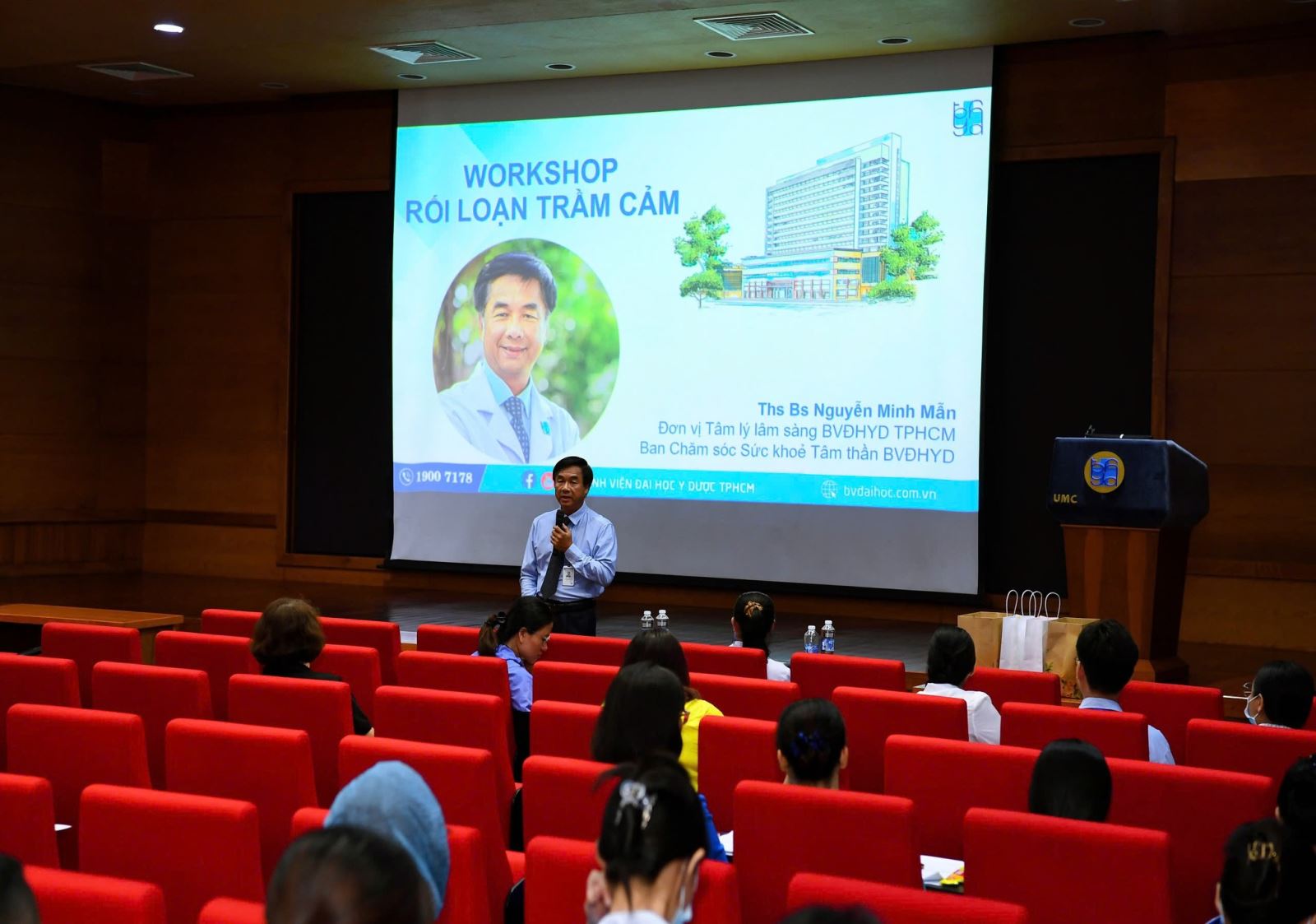
In the “Approach and Therapy for Depression” session, participants embark on a gentle yet profound journey – a journey of self-reflection. From a clinical psychology perspective, feelings of sadness, fatigue, or loss of interest are no longer seen as “weakness”, but understood as signals from the soul that need to be heard. Associate Professor Dr. Nguyễn Minh Mẫn introduced participants to early detection tools such as PHQ-9 and DASS-21, enabling them to differentiate depression from other mental disorders. Beyond diagnosis, the session also opened up self-healing methods such as cognitive-behavioral therapy (CBT), mindfulness practice, or lifestyle adjustments, helping each person understand themselves better and learn to care for their mind as they do for their body each day.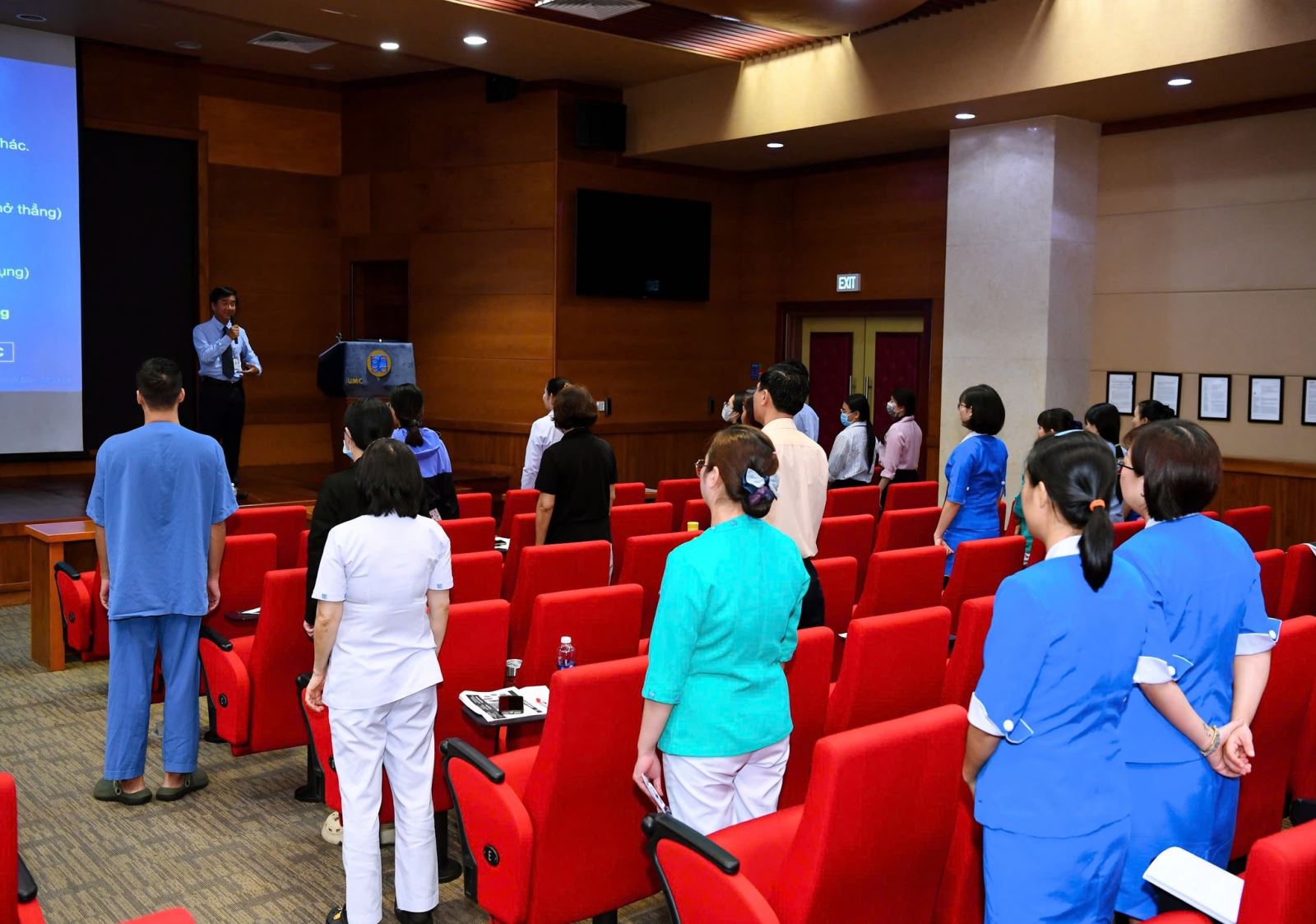
Arriving at the topic “Approach and Therapy for Anxiety Disorders”, the classroom atmosphere seems to slow down, allowing each person to look straight at their own worries, emotions that are both familiar and challenging in the medical profession. Because amid long shifts and life‑or‑death decisions, anxiety can be a motivator that makes us more cautious, but it can also be a burden that exhausts the mind. With modern diagnostic tools such as GAD‑7 and DSM‑5‑TR, learners realize that accepting anxiety is not weakness, but the beginning of inner freedom. When guided through techniques such as exposure, cognitive restructuring, or guided relaxation, each person gradually understands that peace does not come from eliminating emotions, but from how we understand and accompany them.
Closing the series is the “Stress Management” session, offering an intimate, open atmosphere like a conversation among colleagues learning how to “stop and breathe”. Through stress‑control breathing exercises, relaxation techniques, and personal action plans, participants experience the light release of tension, regaining balance between work and life. Each exercise, each quiet moment in class becomes a simple mental tonic – reminding us that rest is also part of service, and only by caring for ourselves can we have enough energy to continue loving, healing, and contributing.
“Medical professionals usually devote all their heart and soul to patients' health, but sometimes they forget their own mental health. This series of topics is an opportunity for us to pause, listen to ourselves and learn how to care for emotions as an essential part of comprehensive health,” - Assoc. Prof. Dr. Nguyen Minh Man shared.
Through the series, the Department of Oncology wishes to care for both physical and mental health for the staff, aiming for a safe - humane - sustainable work environment, where each member is not only healthy to serve, but also at ease to spread love.