
Life‑death boundary: The endless 'beep' in the ICU
1 a.m., the Intensive Care Unit - University Medical and Pharmacy Hospital of Ho Chi Minh City, lights on, the 'white shadows' dart swiftly through the night, occasional 'beep' sounds echo endlessly, tearing the still atmosphere…
A 35-year-old mother gave birth by cesarean section; just after the delivery the baby was retrieved, the patient went into cardiac arrest on the operating table. The hospital-wide emergency support alarm sounded, and doctors and staff of the Intensive Care Unit together with physicians from other departments immediately rushed to the operating room.
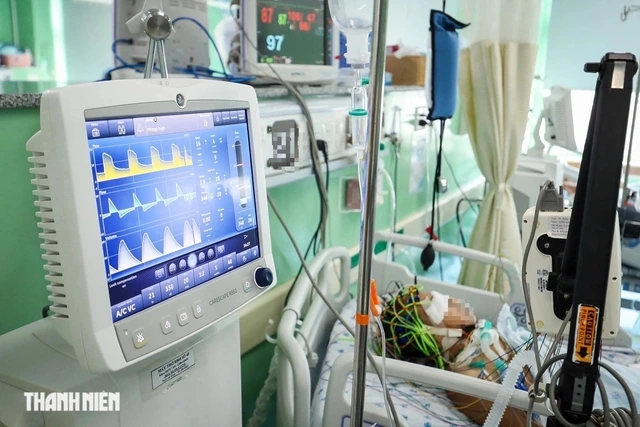
After cardiopulmonary resuscitation, the patient's heart resumed beating and she was quickly transferred to the Intensive Care Unit for continued resuscitation, diagnosed with placental abruption, postpartum hemorrhage due to disseminated intravascular coagulation.
"At that moment, the patient was in severe shock, respiratory failure, circulatory failure, continuous vaginal bleeding, with an imminent risk of death. Everything was extremely urgent, a large volume of blood was mobilized for the patient," said Dr. Bùi Thị Hạnh Duyên (PhD, Head of the Intensive Care Unit - University Medical and Pharmacy Hospital of Ho Chi Minh City).
"Collect blood for transfusion", "Administer medication to the patient", "Conduct tests for the patient"... the orders from the resuscitation doctors continuously rang out. Each person had a task, urgently racing against time.
An urgent multidisciplinary consultation to find the optimal solution to save the patient. All decisions were carefully considered because each solution has its pros and cons. The team unanimously decided to transfer the patient to the digital subtraction angiography (DSA) suite to embolize the uterine arteries to stop bleeding first, then consider removing a pulmonary arterial thrombus.
"The patient will have a high risk of cardiac arrest during transport as well as during the procedure, so the team performing extracorporeal membrane oxygenation (ECMO) and the necessary equipment are being transported together to intervene promptly if an incident occurs. The manpower concentrated in the DSA room is very large, with many specialties such as Intensive Care, Anesthesia, Neurovascular Intervention, Interventional Cardiology and Obstetrics," Dr. Duong recalled.
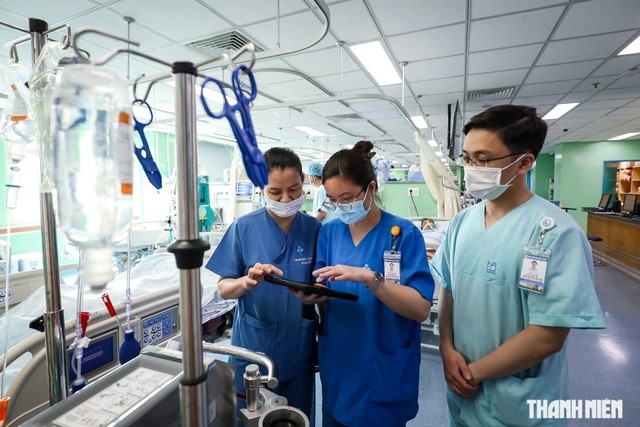
While the interventional doctors focused on embolizing to stop the bleeding, other medical staff held their breath, anxiously watching the result screen. Heavy minutes passed until the image displayed a success signal, the vessels were completely occluded, and the blood flow stopped.
The team performing vascular intervention withdrew, the cardiovascular intervention team continued the work, performing thrombectomy in the pulmonary vessels. The resuscitation team, consisting of four doctors and nurses, remained on site, closely monitoring the patient's breathing and circulation to provide resuscitation and timely ECMO intervention. Each clot was extracted from the patient.
"The patient's hemodynamics and respiration became more stable, so the team decided to postpone ECMO, but that night the patient worsened. Additional staff were brought in during the night to perform ECMO. Sleepless nights were spent closely monitoring every vital sign of the patient, the beeping sounds seemed endless... After many days of struggling for life, the mother regained consciousness and returned to her child. An arduous yet emotionally charged and proud journey for the doctors and medical staff," Dr. Duyen reflected.
‘It’s not just a job, it’s a mission’
Dr. Duyen said that the above case of the mother is one of the emergency situations that doctors and nurses in the Intensive Care Department have actively faced. There is a great amount of pressure in resuscitation work, as the line between life and death is very fragile. Sometimes the disease worsens unexpectedly or continuously.
"For women working in intensive care, the pressure and workload are high, especially night shifts, often leaving no time to worry about caring for their children as much as other women. Often the patients also leave their children at home for relatives to care for, while they themselves have to work shifts caring for other patients. Therefore, this is not just a job but a mission when choosing to commit to the profession," Dr. Duyên expressed.
According to Dr. Duyên, the medical profession is lifelong learning, because one must constantly update new knowledge. If young people are not passionate about the medical field, parents should not force their children to study, because the learning path is long and arduous.
"In the medical profession, one must have love and passion, recognizing that it will require a lot of time and effort. And when you are a skilled doctor, our dedication will help save more patients," Dr. Duyên encouraged.
Dr. Bùi Thị Hạnh Duyên shared: Not only doctors, but nurses working in intensive care also constantly face countless difficulties and pressures. The massive and stressful workload, from drawing blood for tests, adjusting machines, administering medication, continuously updating each patient's condition to handling meals, hygiene, bathing, and changing linens for patients. Physical and mental fatigue is inevitable. They are silent heroes.