
Multimodal treatment: Late-stage gastric cancer patients extend vital survival time
Research by doctors in the Gastroenterology Department, University Medical Center, Ho Chi Minh City shows that advances in minimally invasive surgery and multimodal therapy allow patients with late-stage stomach cancer to survive more than 3 years, with rates up to 36-50%.
Survival hope for patients with late-stage stomach cancer
“My abdominal pain turned out to be stomach cancer. Previously, for many months I had heartburn and bloating, but I thought it was due to age, so I was complacent and didn’t get checked. By the time it was discovered, my stomach cancer had progressed and there were large metastatic lymph nodes. Doctors warned that surgery might not be possible,” said patient Nguyen Thi H. H (45, Ho Chi Minh City). She was extremely confused upon receiving that heartbreaking diagnosis from the doctors.
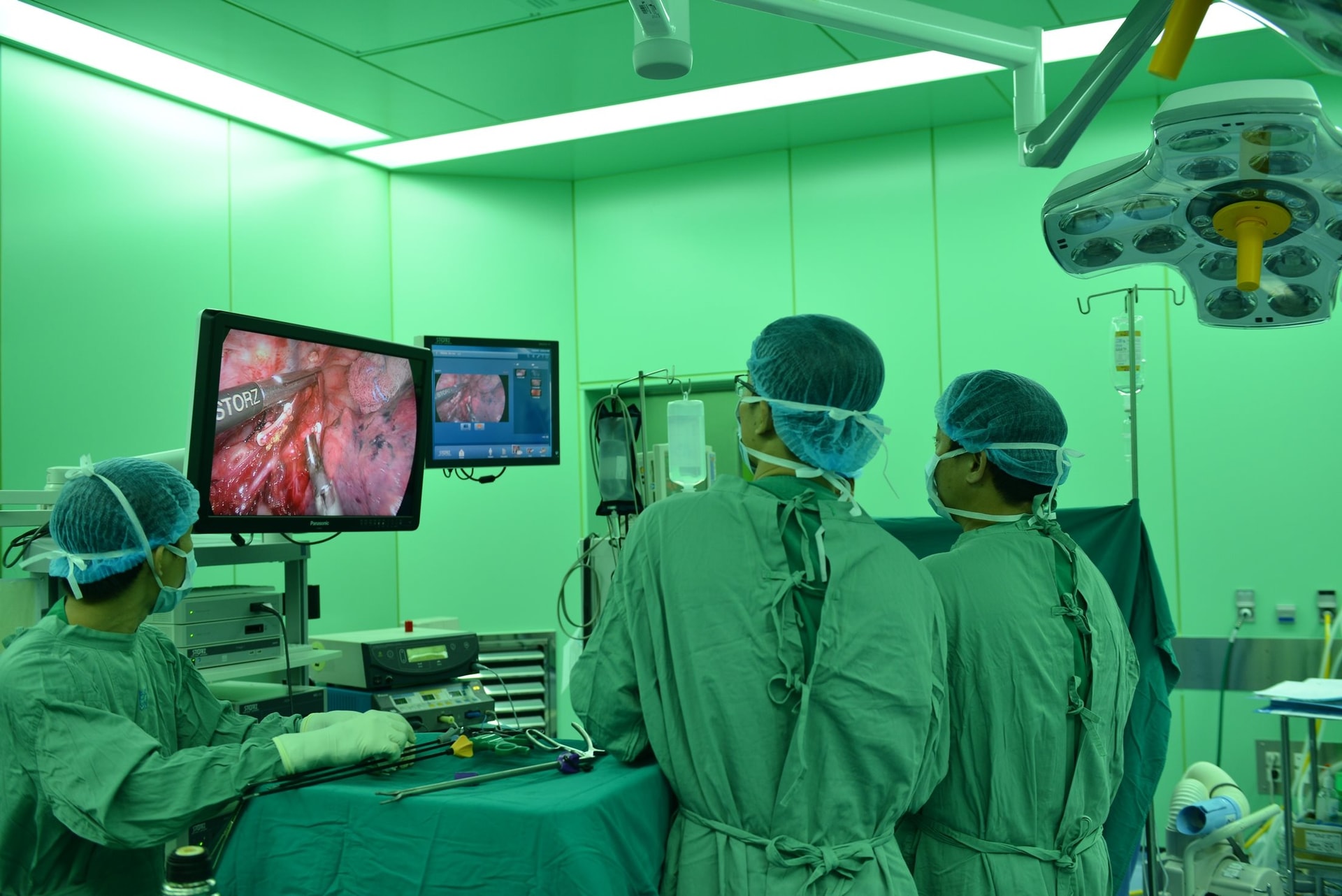
According to research by the Department of Gastroenterology, University Medical Center Ho Chi Minh City, advances in laparoscopic surgery and multimodal treatment enable patients with late-stage gastric cancer to survive beyond 3 years, with rates up to 36-50%.
However, when she visited the University Medical Center Ho Chi Minh City, she was consulted by Associate Professor Dr. Võ Duy Long, Deputy Head of the Department of Gastroenterology, and given her disease progression, doctors would initially administer chemotherapy to shrink the metastatic tumors and lymph nodes in organs outside the stomach; subsequently, the patient would undergo surgery to remove the stomach and perform thorough lymph node dissection. After surgery, the patient continues chemotherapy and close monitoring.
“Previously, most cases of late-stage gastric cancer that had invaded or metastasized were untreatable by doctors, and patients could only live an additional 6-12 months. Today, patients with late-stage gastric cancer can still be successfully treated if the correct multimodal treatment approach is applied,” said Associate Professor Dr. Võ Duy Long.
In 2024, a study on “The effectiveness of multimodal combination in the treatment of advanced-stage gastric cancer” conducted by the Gastroenterology Department physicians at the University Medical Center Ho Chi Minh City, chaired by Associate Professor Dr. Võ Duy Long, was published in the European Journal of Surgical Oncology (European Cancer Surgery Journal). The study was performed on 52 patients with late-stage gastric cancer that had metastasized to the abdominal cavity. The results are extremely promising. The study has been conducted from 2018 to present.
Accordingly, among patients treated with the multimodal method, about 36% responded very well, have now survived more than 3 years and are still being monitored. Patients can live normally and return to everyday life like ordinary people.
Another study concerning a multimodal treatment regimen for 43 patients with gastric cancer invading the pancreas, colon, liver, and spleen, also conducted by the same research team, was published in the World Journal of Surgical Oncology. The results also show that, for such advanced gastric cancer, the 3‑year survival rate of patients is 50%.
One example is patient H.H. (born 1982, Can Tho) who came to the University of Medicine and Pharmacy Hospital in Ho Chi Minh City for examination with symptoms such as nausea, loss of appetite, sudden weight loss. In addition, she feels unwell, always fatigued, and occasionally experiences a dull pain in the left abdominal area.
Based on the examination and preclinical test results, doctors determined that the patient has late-stage gastric cancer in the cardia region. The cancer cells have invaded the head of the pancreas and the lower surface of the left liver.
The doctors applied a multimodal cancer treatment approach for this patient. The patient received chemotherapy with a new-generation drug to reduce tumor burden. Subsequently, the doctors performed minimally invasive surgery to resect almost the entire stomach, performed thorough lymph node dissection for the patient, and then combined it with targeted therapy.
“The minimally invasive surgical method reduces the risk of complications, the patient experiences less pain and recovers quickly. The operation achieves aesthetic results while still ensuring curative treatment of the cancer. Applying a multimodal approach combined with minimally invasive surgery for gastric cancer, many patients maintain stable health. After 2, 3 years of follow‑up, laboratory results remain within normal limits, with no signs of metastasis or recurrence”, Dr. Long said.
Gastric cancer: 1 in 5 most common cancers in Vietnam
According to Associate Professor Dr. Võ Duy Long, stomach cancer is one of the five most common cancers in Vietnam, alongside lung cancer, liver cancer, breast cancer, and colorectal cancer. The Gastroenterology Department, University Medical Center Ho Chi Minh City, receives an average of 300 stomach cancer cases per year. Among them, young patients (under 40 years old) account for about 15-20%.
He said: “The specific cause of stomach cancer is not clear. However, medical literature notes that the disease is increasingly prevalent and occurring at younger ages due to unhealthy lifestyle habits. These include consuming large amounts of long-fermented foods, mold‑contaminated foods, smoked foods, grilled items; living in a toxic, heavily polluted environment; abuse of alcohol and tobacco; and partly due to genetic factors.
In addition, untreated Helicobacter pylori infection is also one of the high‑risk factors that makes stomach cancer more likely, although not everyone infected with HP will develop this cancer. However, chronic gastritis can lead to cells becoming malignant tumors…”.
In the early stage, people with stomach cancer almost have no specific symptoms, but they may exhibit signs that are easily mistaken for ordinary gastritis, such as slow or difficult eating, bloating, nausea.
In the late stage, many more severe symptoms will appear such as: prolonged abdominal pain, vomiting, vomiting blood, black stools, feeling a mass in the abdomen or anemia, bluish skin, severe weight loss…
Prof. Dr. Võ Duy Long recommends that, to prevent and detect early abnormalities in the stomach, we should undergo screening such as gastric endoscopy after the age of 40. When a small tumor is detected at an early stage of stomach cancer, the patient can undergo endoscopic surgery to completely remove the tumor, which may not require removal of the entire stomach, and then be prescribed appropriate chemotherapy or radiotherapy regimens. The 5‑year survival rate can reach up to 95%.
Prof. Dr. Võ Duy Long is currently a member of the Executive Board of the Asian Pacific Gastric Cancer Association (president of the Association for the 2022‑2024 term), a member of the World Gastric Cancer Association, the Endoscopic Surgery Society (PTNS) and the American Society for Gastroenterology, and a member of the PTNS and Vietnamese Endoscopy societies.