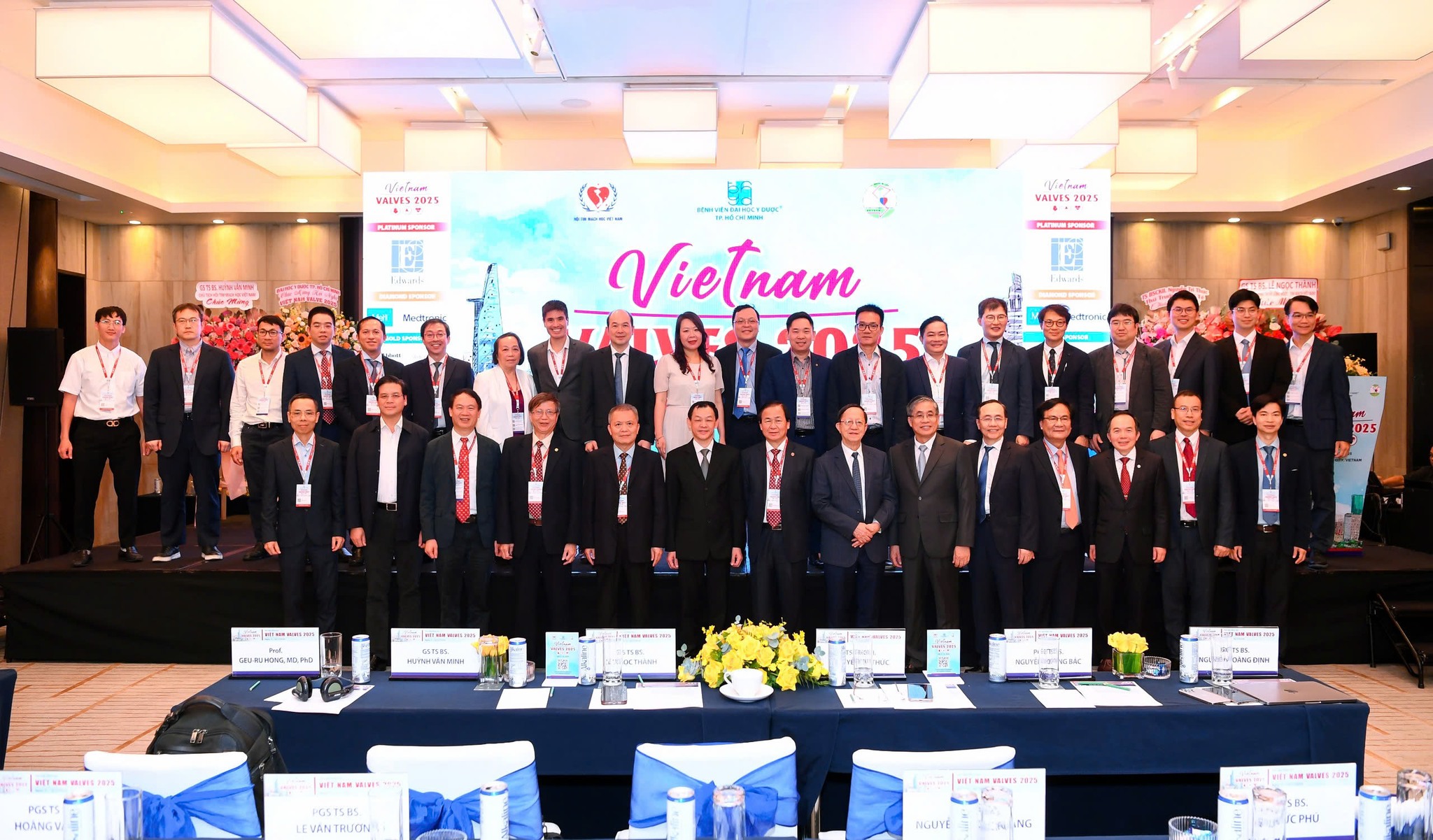
Vietnam Valves Conference 2025 - Establishing professional consensus – Expanding prospects for treating heart valve disease in Vietnam
On July 11 and 12, 2025 in Ho Chi Minh City, the Vietnam Valves 2025 scientific conference, organized by Ho Chi Minh City University Medical Center Hospital (BV ĐHYD) in collaboration with the Vietnam Society of Cardiothoracic Surgery, the Vietnam National Cardiology Society, and Yonsei University (South Korea), is the first scientific event in Vietnam dedicated to the transcatheter aortic valve replacement (TAVI) technique – one of the most modern treatment methods in interventional cardiology. The conference gathered more than 500 leading experts from home and abroad, providing important scientific updates and professional consensus of strategic significance for the heart valve disease treatment system in Vietnam.
Speaking at the opening ceremony, Associate Professor Dr. Nguyễn Hoàng Bắc – Director of BV ĐHYD and Chair of the Vietnam Valves 2025 Conference emphasized: "The success of Vietnam Valves 2025 is not only due to the scale of the organization or scientific quality, but also lies in the spirit of willingness to share, learn, and jointly build a common direction among specialties. We believe that the consensus formed at this conference will lay the foundation for a modern, safer, and more effective heart valve disease treatment pathway for Vietnamese patients. I hope Vietnam Valves will become an annual academic forum, contributing to making TAVI an essential part of modern treatment systems, while affirming Vietnam's pioneering role in the region."
Attending the opening ceremony, Dr. Nguyen Tri Thuc, Deputy Minister of Health, highly praised the content and academic spirit of the conference: "The conference gathered almost all leading cardiology experts nationwide. The Ministry of Health will adopt and cooperate with professional societies to incorporate it into a standardized national treatment protocol". He also expressed hope that the conference will serve as a foundation for developing advanced, practice‑relevant clinical guidelines that provide optimal treatment outcomes for cardiovascular patients in Vietnam.
Associate Professor Dr. Nguyen Hoang Dinh, Deputy Director of the National Heart Institute, added: "Vietnam Valves 2025 is a clear testament to Vietnam's cardiology field's capacity to organize, connect, and lead academically. Beyond merely updating knowledge, the conference laid the groundwork for the first national practice guidelines for the TAVI technique, creating a basis for more systematic and safer implementation across cardiac centers nationwide".
In the context where TAVI is gradually becoming the new standard treatment for patients with severe aortic stenosis at high surgical risk, and its indication is also being expanded to both intermediate- and low-risk groups, Vietnam still lacks a standardized, consensus professional guideline for treatment nationwide. TAVI is currently only implemented in a few tertiary hospitals, not yet widespread in provincial healthcare facilities, and the selection of patients, assessment of treatment efficacy, or management of complications still lacks consistency across units.
The Vietnam Valves 2025 conference has played an important role in addressing this professional gap. Many notable topics were presented and discussed in depth, including new advances in bioprosthetic valve design, strategies to optimize the valve implantation process, preventive methods and management of complications such as paravalvular leak, valve embolization, or valve-in-valve procedures on existing bioprostheses. Notably, recent international studies have shown that TAVI is not only suitable for high‑risk patients but is increasingly becoming the preferred choice for younger, low‑risk patients, opening the possibility for broader application in clinical practice in Vietnam.