

Corticosteroid Eye Drops: What you need to know about their risks and complications
Corticosteroid eye drops are commonly known for their ability to quickly reduce eye inflammation and itching. However, few people are aware that misuse or unsupervised use of these medications can turn them into a “double-edged sword,” causing serious and permanent damage to the eyes and potentially leading to blindness.
1. What are corticosteroids in eye drops?
Corticosteroids, also known as steroids, are a group of potent anti-inflammatory medications widely used to treat various inflammatory and allergic conditions, including eye diseases [1]. In ophthalmology, corticosteroids are commonly formulated as eye drops to treat conditions such as severe allergic conjunctivitis, uveitis, postoperative inflammation, and other inflammatory eye conditions [1].
1.1. Classification and main effects
Corticosteroid eye drops are available in several types with varying levels of potency, including dexamethasone, prednisolone, betamethasone, loteprednol, and fluorometholone [2]. Their primary effects are to suppress inflammation and reduce swelling, redness, itching, and pain [1].
1.2. Mechanism of action
Corticosteroids work by interfering with the body's immune system and reducing the production of inflammatory mediators [2]. In the eye, they help control inflammation by reducing swelling and suppressing local immune cell activity.
2. Why are corticosteroid eye drops a “double-edged sword”?
Although corticosteroid eye drops can provide rapid relief, they also carry significant risks if not used correctly.
2.1. Benefits when used as indicated
When prescribed by a doctor and used as directed, corticosteroids can effectively control severe inflammatory conditions, rapidly relieve symptoms, and help prevent long-term eye damage [1]. They are an important component in the treatment of many ophthalmic conditions.
2.2. Risks of misuse or improper use
Conversely, unsupervised use, excessive dosing, or prolonged use of corticosteroid eye drops without medical supervision can lead to serious adverse effects [1, 3]. This makes them a “double-edged sword,” providing short-term benefits while potentially causing long-term harm.
3. Serious consequences of corticosteroid eye drop misuse
Misuse of corticosteroid eye drops can cause a number of serious complications that directly affect vision and may lead to permanent blindness.
3.1. Steroid-induced ocular hypertension and glaucoma
One of the most concerning complications is steroid-induced ocular hypertension and glaucoma [1, 2, 3]. Corticosteroids can increase intraocular pressure (IOP) by altering the structure of the trabecular meshwork, which is responsible for draining aqueous humor from the eye [1, 2]. When this pressure remains elevated for a prolonged period, it can damage the optic nerve and lead to glaucoma. Steroid-induced glaucoma may develop gradually without obvious symptoms in its early stages, meaning that patients may not realize they have a problem until irreversible vision loss has occurred [3]. Children and older adults are at higher risk [2, 5].
3.2. Cataracts
Prolonged corticosteroid use, particularly in the form of eye drops, can cause posterior subcapsular cataracts [4]. This condition causes clouding of the lens, reducing vision and potentially requiring surgery for treatment.
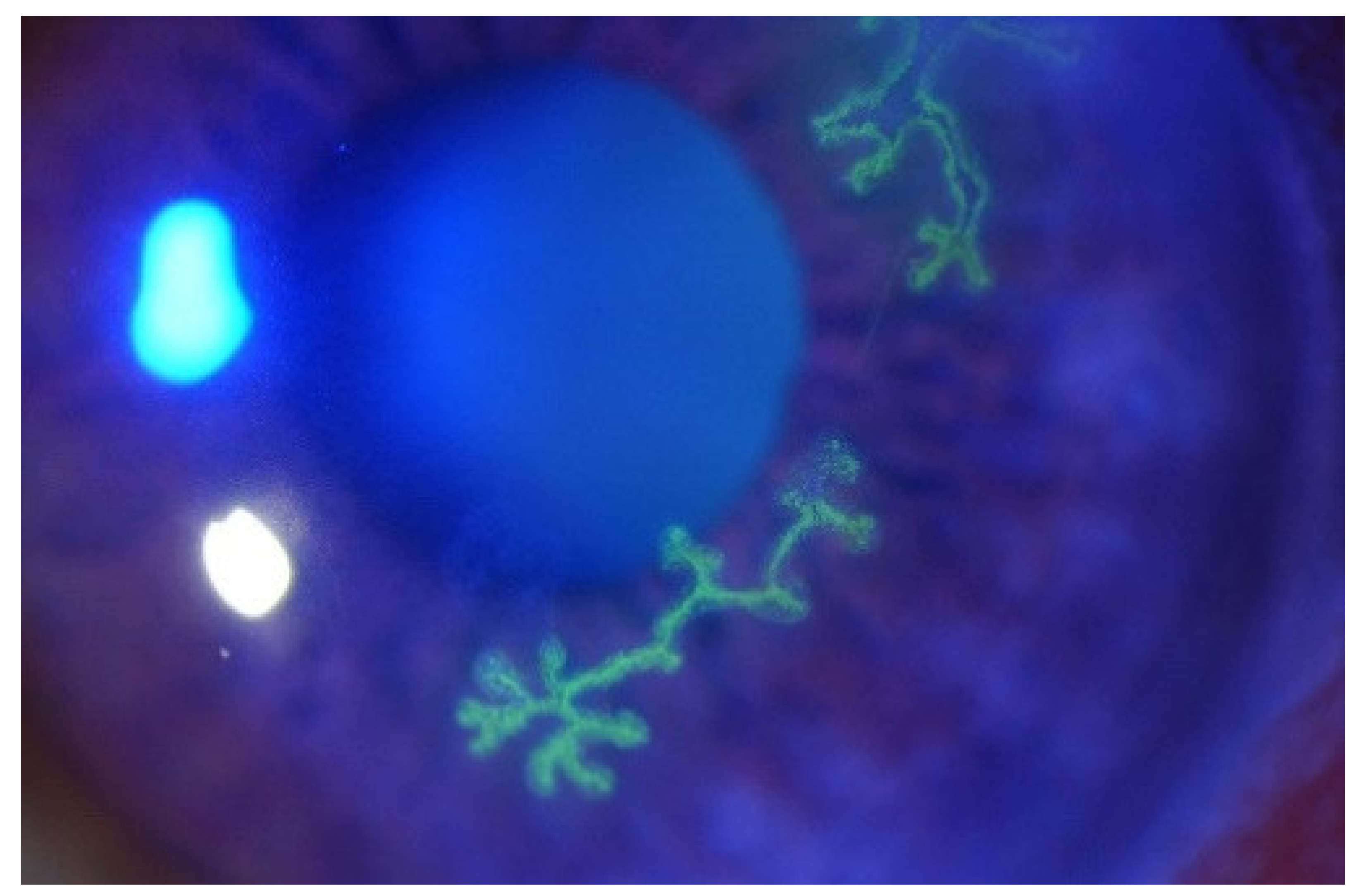
3.3. Worsening eye infections (bacterial, viral, and fungal)
Corticosteroids suppress the immune response, reducing the eye's ability to fight infections [8]. Therefore, using these medications can mask the initial symptoms of an infection, allowing the condition to become more severe and more difficult to treat, particularly viral infections such as herpes simplex or fungal infections, which can be particularly dangerous to the eye [8].
3.4. Corneal damage
In some cases, corticosteroids can cause corneal thinning, which may lead to corneal ulceration or perforation, particularly when the eye already has existing damage or infection [3].
3.5. Permanent blindness
All of the complications above, particularly untreated glaucoma, can potentially lead to permanent, irreversible blindness [1, 2, 3, 4, 5, 6, 7]. This is the most serious consequence of corticosteroid eye drop misuse.
4. Who is at higher risk?
- People who self-purchase and use the medication without a prescription: This group is at particularly high risk because they may not have the medical expertise needed to assess their condition and the potential adverse effects of the medication [3].
- People who use the medication for prolonged periods without medical supervision: Even when the medication was initially prescribed by a doctor, continuing to use it beyond the recommended duration without follow-up can be dangerous [3].
- People with a history of glaucoma or ocular hypertension: These individuals may be more sensitive to corticosteroids and are more likely to develop increased intraocular pressure, potentially leading to rapidly progressive glaucoma [2].
5. Warning signs you should not ignore
If you are using corticosteroid eye drops and experience any of the following signs, stop using the medication immediately and see an ophthalmologist:
- Gradually blurred vision: Reduced visual acuity or difficulty seeing objects clearly.
- Persistent eye pain or redness: Discomfort, pain, or persistent redness that does not improve.
- Sensitivity to light: Increased glare or discomfort when exposed to light.
- Recurrent or worsening symptoms of eye infection: Eye discharge, swelling, worsening redness, or other symptoms of infection that do not improve and instead become more severe.
6. Recommendations to protect your eyes
To protect your eyes from the potential risks associated with corticosteroid eye drops, follow these recommendations:
- Always consult an ophthalmologist before use: Do not purchase or use eye drops on your own, especially those containing corticosteroids. Allow your doctor to accurately diagnose your condition and prescribe appropriate medication [3].
- Follow the prescribed dosage and treatment duration: Use the medication exactly as directed by your doctor in terms of dosage, frequency, and duration. Do not increase the dose or extend the course of treatment on your own [3].
- Do not self-purchase corticosteroid eye drops: Avoid purchasing eye drops of unknown origin or those without a doctor's prescription, particularly products advertised as providing rapid relief [3].
- Have regular eye examinations, especially if you have a history of corticosteroid use: If you have used corticosteroid eye drops for a prolonged period, attend regular follow-up appointments so your doctor can monitor intraocular pressure and eye health and detect complications early [2].
7. Frequently asked questions (FAQ)
- Are corticosteroid eye drops addictive? No, corticosteroids are not addictive in the conventional sense associated with addictive substances. However, because they can provide rapid symptom relief, patients may misuse them or become reliant on them to control uncomfortable symptoms, resulting in prolonged use without medical indication.
- How can I tell whether my eye drops contain corticosteroids? You can check the ingredients listed on the medication label. Common active ingredients include dexamethasone, prednisolone, betamethasone, fluorometholone, and loteprednol. If you are unsure, ask a pharmacist or doctor.
- What should I do if I have already used corticosteroids for a prolonged period? Stop using the medication immediately and see an ophthalmologist for an examination and assessment of any eye damage and to receive an appropriate treatment plan. However, do not stop the medication abruptly without your doctor's guidance, as this may cause inflammation to flare up or lead to other adverse effects.
- Can children use corticosteroid eye drops? Children may use corticosteroid eye drops in certain circumstances, but only under strict supervision and prescription by an ophthalmologist. Children are particularly sensitive to the adverse effects of corticosteroids, including increased intraocular pressure, and require close monitoring [5].
- Are there safer alternatives to corticosteroid eye drops? Yes. Depending on the specific condition, a doctor may prescribe other eye drops that may be more appropriate, such as antihistamines, mast cell stabilizers, or topical nonsteroidal anti-inflammatory drugs (NSAIDs). The choice of an alternative medication should be determined by a doctor.
8. References
[1] Phulke, S. (2017). Steroid-induced Glaucoma: An Avoidable Irreversible Blindness. PMC.
https://pmc.ncbi.nlm.nih.gov/articles/PMC5577123/. Truy cập: 2025-12-19.
[2] Feroze, K. B. (2023). Steroid-Induced Glaucoma. NCBI Bookshelf - NIH.
https://www.ncbi.nlm.nih.gov/books/NBK430903/. Truy cập: 2025-12-19.
[3] Teo, B. H. K. (2023). Steroid-induced glaucoma: an avoidable cause of .... PMC.
https://pmc.ncbi.nlm.nih.gov/articles/PMC10481737/. Truy cập: 2025-12-19.
[4] Algorinees, R. M. (2025). Assessment and Knowledge of Long-Term Steroid Use and Its .... PMC.
https://pmc.ncbi.nlm.nih.gov/articles/PMC11846618/. Truy cập: 2025-12-19.
[5] Dubey, S. (2025). Risk Factors Associated With Steroid-Induced Ocular Hypertension and Glaucoma in Patients With Vernal Keratoconjunctivitis in a North Indian Population: A Multicenter Study. PMC.
https://pmc.ncbi.nlm.nih.gov/articles/PMC12431925/. Truy cập: 2025-12-19.
[6] Phulke, S. (2017). Steroid-induced Glaucoma: An Avoidable Irreversible .... PubMed.
https://pubmed.ncbi.nlm.nih.gov/28924342/. Truy cập: 2025-12-19.
[7] Daniel, B. S. (2015). Ocular side-effects of topical corticosteroids. PubMed.
https://pubmed.ncbi.nlm.nih.gov/25754554/. Truy cập: 2025-12-19.
[8] Sagara, H. (2017). Impact of Topically Administered Steroids, Antibiotics, and .... PMC.
https://pmc.ncbi.nlm.nih.gov/articles/PMC5613473/. Truy cập: 2025-12-19.
The information above is for reference purposes only and is not intended as medical advice. Please contact your doctor for detailed medical consultation.