

Erythrodermic psoriasis – Rare but dangerous

1. What Is Erythrodermic Psoriasis?
According to the U.S. medical information source Cedars-Sinai (CSC), erythrodermic psoriasis is a rare form of psoriasis (accounting for approximately 3% of all psoriasis cases) that causes widespread skin redness affecting over 90% of the body's surface area. In addition to skin lesions, the disease causes systemic manifestations, follows a prolonged course, and in severe cases, can be life-threatening.
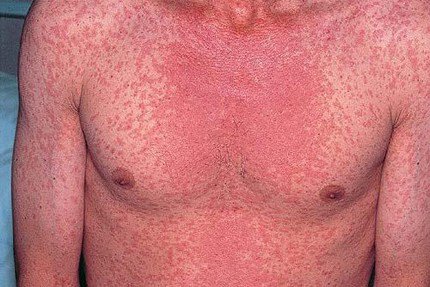
The condition can occur at any age, most commonly in individuals aged 40 to 60. Compared to other types of psoriasis, erythrodermic psoriasis causes severe pain and discomfort and can be life-threatening, thus requiring immediate medical care and treatment.
Compared to other forms of psoriasis such as plaque psoriasis (80–90%), guttate psoriasis, and pustular psoriasis, erythrodermic psoriasis is characterized by generalized red rashes, bright red, shiny, edematous, taut, and weeping skin covered with moist scales. There are no unaffected skin areas, and patients may experience severe itching, erosion, weeping, purulent discharge, cracking, and burning pain across the entire body surface.
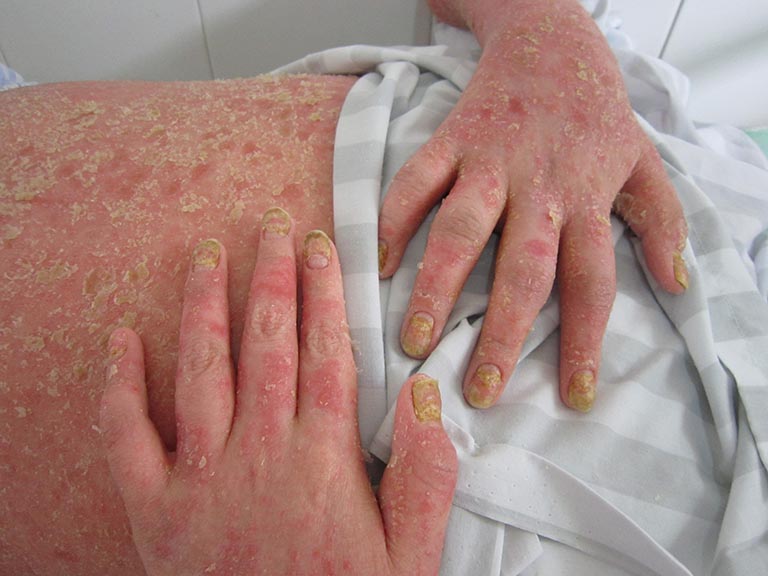
Additionally, erythrodermic psoriasis causes skin thickening and deep skin folds, particularly due to edema, dermal cellular infiltration, or lichenification. More than 80% of patients with chronic erythrodermic psoriasis develop hyperkeratosis on the palms and soles. Hyperpigmentation or hypopigmentation can cause the skin to darken or form mottled patches.
The skin around the orbits may become inflamed, red, and accompanied by ectropion and epiphora. Facial features can be distorted due to edema or infiltration, erasing facial wrinkles and replacing them with coarse, irregular, bumpy masses. Hair and nail damage may occur, accompanied by severe itching and insomnia. Patients may also experience high fever, chills, or rigors.
Erythrodermic psoriasis can alter the body's metabolism, and other symptoms may include swelling, particularly around the ankles, joint pain, chills or fever, peripheral lymphadenopathy, and hepatosplenomegaly.
2. Causes of the Disease
To date, the exact causes of psoriasis in general and erythrodermic psoriasis in particular remain unclear. Risk factors may include the sudden cessation of psoriasis treatments, infections, severe sunburn, psychological stress, alcohol abuse, allergic reactions, rashes, and the oral or injectable use of corticosteroids.
Complications of erythrodermic psoriasis can alter the body's metabolism, lead to exhaustion due to fluid and protein loss, cause severe edema from water retention, and result in severe infections, including pneumonia, sepsis, and congestive heart failure.
3. Treatment and Prevention
The general principle combines symptomatic treatment with the elimination of triggering causes. Treatment options include topical steroid creams and moisturizers, wet wraps, and bed rest.
Systemic medications include methotrexate, acitretin, cyclosporine, retinoids, TNF biologic inhibitors, intravenous fluid or electrolyte replacement, and antibiotics to prevent or treat secondary bacterial infections.
Regarding prevention, patients should adhere to their treatment regimens and avoid risk factors that exacerbate the condition. Following an erythrodermic flare-up, the skin may eventually return to its baseline state. Additional supportive measures include fluid and electrolyte replacement based on electrolyte panels, nutritional enhancement with vitamins, intravenous albumin infusion, and blood transfusion.
Prevention of deep vein thrombosis and physical therapy are indicated for patients with prolonged bed rest. It is essential to remember that early diagnosis and aggressive treatment of erythrodermic psoriasis yield high efficacy, reducing mortality and complication rates for patients.
The information above is for reference purposes only and is not intended as medical advice. Please contact your doctor for detailed medical consultation.