

Staying safe on sick days: What people with type 2 diabetes need to know

If you are living with type 2 diabetes, you are probably familiar with managing your blood glucose every day. But have you ever wondered: “What should I do if I get sick, even with something as common as a cold or diarrhea?”
A sick day, whether due to a cold, fever, or any infection, can cause your blood glucose to fluctuate unpredictably and lead to dangerous complications. Don’t worry! This article provides a medically appropriate “sick day plan” to help you proactively manage these difficult days safely.
1. Why does being sick make blood glucose “go haywire”?
When you are sick, your body activates its defense system. This system releases hormones such as cortisol and adrenaline to fight the illness. However, these hormones can:
- Increase blood glucose: The liver produces more glucose to provide energy for the body to “fight,” causing blood glucose to rise sharply even when you eat very little.
- Cause temporary insulin resistance: These hormones make insulin, whether produced by the body or administered by injection, less effective.
Consequences: You may be at risk of severe hyperglycemia, serious dehydration, and even emergency complications.
2. 4-step “sick day” action plan
Think of this as your survival guide when you are sick.
2.1. Step 1: Check your blood glucose more frequently
Normally, you may check your blood glucose 1–2 times a day, but when you are sick:
- Check your blood glucose every 2–4 hours, including during the night.
- Record your results to monitor trends in your blood glucose levels.
2.2. Step 2: Medication guidelines — When should you continue or temporarily stop?
⚠️ This is the most important part.
For insulin:
- Never stop insulin completely on your own. Even if you cannot eat, the liver continues to produce glucose. If insulin is stopped, you are at very high risk of ketoacidosis.
- However, the dosage may need to be adjusted, either increased or decreased. Contact your doctor to determine the appropriate insulin dose.
For oral medications (Note the “temporarily stop when dehydrated” rule): If you have vomiting, diarrhea, or a high fever causing dehydration, ask your doctor about temporarily stopping the following medications until you are able to eat and drink normally again:
- Metformin: Risk of lactic acidosis.
- SGLT2 inhibitors (medications ending in “-flozin,” such as dapagliflozin and empagliflozin): Risk of ketoacidosis.
- Blood pressure medications (diuretics, ACE inhibitors/angiotensin receptor blockers): Risk of acute kidney injury.
Note: Temporarily stop these medications only and restart them once you have fully recovered. Other medications such as gliclazide and insulin should still be taken, but the dosage may need to be adjusted if you cannot eat.
2.3. Step 3: Eating and staying hydrated
The goal is to prevent dehydration and hypoglycemia.
- If you can eat: Have small meals divided into several portions throughout the day.
- If you cannot eat due to loss of appetite or nausea: Try to drink or eat liquid foods containing carbohydrates to maintain energy.
- Suggestions: Thin porridge, soup, milk, crackers, or diluted fruit juice.
- Stay hydrated: Drink 200–250 mL of plain water every 1–2 hours. If your blood glucose is low, you may drink an oral rehydration solution (ORS) or diluted fruit juice.
2.4. Step 4: Be cautious with cold and flu medications
- Cough syrups/lozenges: These often contain a significant amount of sugar. Choose sugar-free products or products specifically intended for people with diabetes.
- Anti-inflammatory/pain-relieving medications: Some medications for severe pain or sore throat contain corticosteroids, such as prednisolone or dexamethasone. These medications can cause blood glucose to rise significantly. Tell your pharmacist that you have diabetes before purchasing medication.
3. Warning signs: When should you seek emergency medical care?
Do not try to manage the condition at home if you experience any of the following:
- Severe gastrointestinal symptoms: Vomiting or diarrhea lasting more than 6 hours, with inability to drink water (risk of dehydration and kidney injury).
- Uncontrolled blood glucose:
- Persistently above 15 mmol/L (270 mg/dL) for 24 hours despite taking appropriate measures.
- Or below 3.9 mmol/L (70 mg/dL) after treatment for hypoglycemia.
- Signs of acidosis or severe dehydration:
- Shortness of breath or rapid, deep breathing.
- Breath that smells like ripe fruit or vinegar (ketoacidosis).
- Severe abdominal pain.
- Drowsiness or confusion.
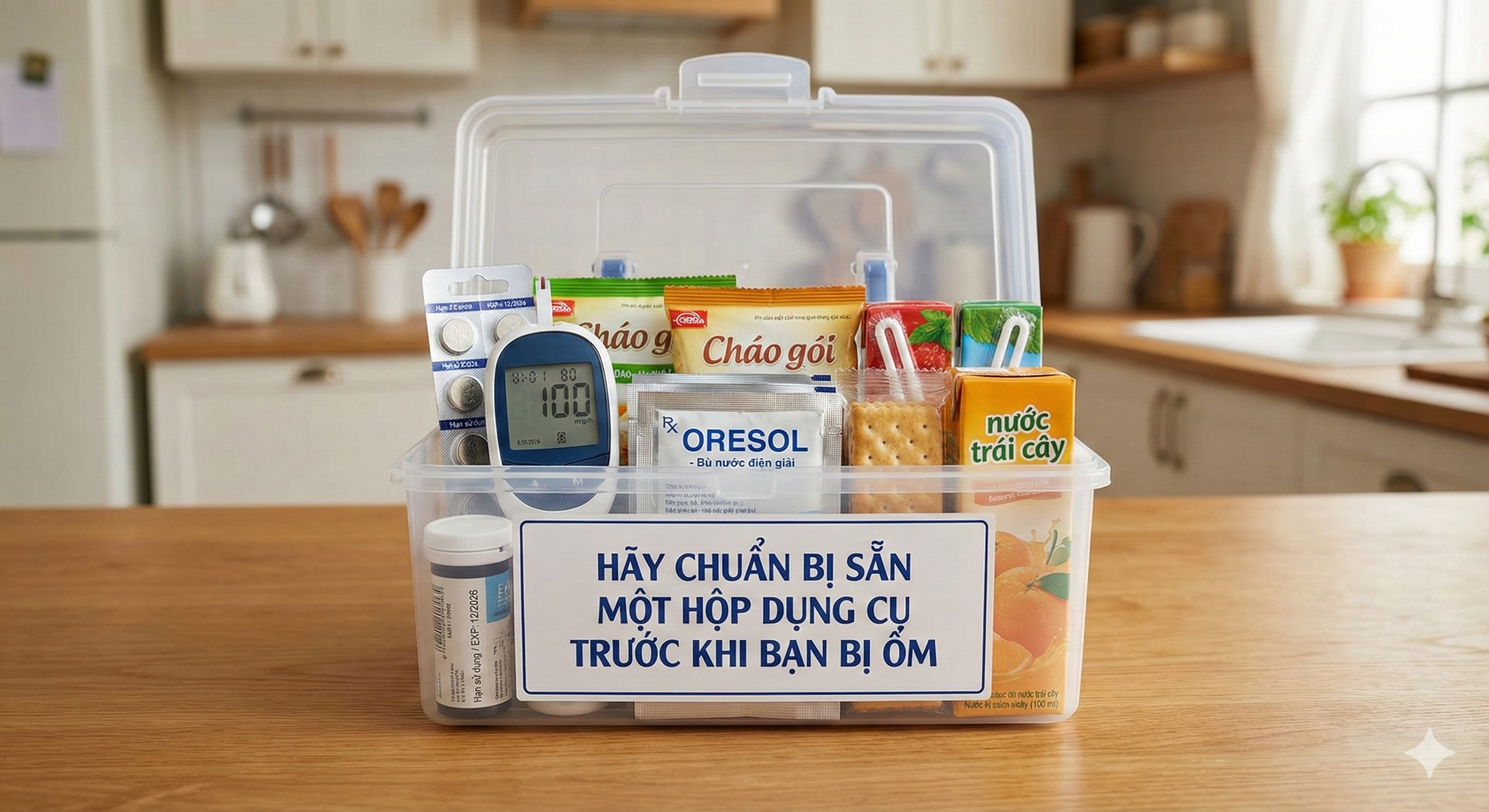
4. Advice for a “sick day emergency kit”
Prepare a kit in advance before you become sick:
- Blood glucose meter and spare batteries
- Unexpired blood glucose test strips
- Several packets of ORS (oral rehydration solution)
- Easy-to-digest foods for storage, such as instant porridge, crackers, and small cartons of fruit juice
Conclusion: Being sick when you have diabetes requires extra caution. By following this plan and paying particular attention to medication use, you can protect yourself from dangerous complications. We wish you good health!
5. Frequently asked questions (FAQ)
Why does my blood glucose rise when I am sick?
When you are sick, your body releases hormones to fight the illness. These hormones can increase blood glucose levels, making your blood glucose more difficult to control than usual [1, 3].
What should I do if I am sick and have no appetite?
If you have no appetite, try to eat small, easily digestible meals such as soup or porridge, or drink fruit juice. The goal is to provide your body with sufficient carbohydrates [3].
Should I stop taking my diabetes medications when I am sick?
No. You should not stop taking diabetes medications or insulin on your own unless instructed by your doctor [3]. Doing so can be dangerous. Ask your doctor about your “sick day plan” so that you know how to adjust your medications when necessary [2].
When should I seek immediate medical attention when I am sick?
You should seek immediate medical attention if you experience symptoms such as shortness of breath, severe vomiting, prolonged severe diarrhea, persistent high fever, uncontrolled high or low blood glucose, or confusion and difficulty concentrating [1, 3].
6. Medical review and references
Medical consultation:
- MSc, MD. Nguyen Dinh Tuan — Department of Endocrinology, University Medical Center Ho Chi Minh City
References:
- [1] Centers for Disease Control and Prevention (CDC) (2024). Manage Your Diabetes When You’re Sick. URL: https://www.cdc.gov/diabetes/living-with/managing-sick-days.html. Retrived: 2025-12-04.
- [2] Watson, K. E., et al. (2022). Sick Day Medication Guidance for People With Diabetes, Kidney, or Cardiovascular Disease: A Systematic Scoping Review. Kidney Medicine, 4(9), 100491. URL: https://pmc.ncbi.nlm.nih.gov/articles/PMC9420951/. Retrived: 2025-12-04.
- [3] MedlinePlus (2024). Diabetes - when you are sick. URL: https://medlineplus.gov/ency/patientinstructions/000079.htm. Retrived: 2025-12-04.
- [4] Watson, K. E., et al. (2023). Consensus Recommendations for Sick Day Medication Guidance for People With Diabetes, Kidney, or Cardiovascular Disease: A Modified Delphi Process. American Journal of Kidney Diseases, 81(5), 564-574. URL: https://pubmed.ncbi.nlm.nih.gov/36470530/. Retrived: 2025-12-04.
The information above is for reference purposes only and is not intended as medical advice. Please contact your doctor for detailed medical consultation.