

Thrombosis: Hidden Dangers and How Compression Pumps Protect You
At the Neurosurgical Intensive Care Unit, we frequently hear patients express discomfort about wearing sequential compression devices (SCDs), often thinking that "taking them off for a moment is probably fine," or even refusing to use them. However, those seemingly harmless moments of removing the device conceal a serious risk: the formation of blood clots.
Following surgery or during critical illness, your body is prone to developing thrombosis—and even a small blood clot can lead to major consequences, such as a life-threatening pulmonary embolism. Fortunately, there is a simple, safe, and effective measure to prevent this risk: wearing sequential compression devices (SCDs) correctly and for the required duration.
This article will help you understand why you should not remove your SCDs, the importance of this device, and how it protects you throughout your treatment.
1. What Is Thrombosis and Why Is It Dangerous?
1.1. How Do Blood Contrasts Form?
Thrombosis is the condition where a blood clot forms in one or more deep veins of the body, usually in the legs. Blood clots can develop if you are inactive for an extended period, such as being bedridden due to surgery, illness, or trauma [2]. The primary causes of thrombosis include injury to the vein wall from surgery, inflammation, or trauma [2].
1.2. Who Is at Risk for Thrombosis?
Multiple factors increase the risk of blood clot formation. The more risk factors you have, the higher your likelihood of developing thrombosis. Risk factors include [2]:
- Age: Individuals over 60 are at higher risk, though thrombosis can occur at any age.
- Immobility: When legs do not move for prolonged periods (such as extended hospitalization or paralysis), calf muscles do not contract, reducing blood circulation.
- Trauma or Surgery: Vascular injury or surgical procedures increase the likelihood of blood clot formation.
- Pregnancy: Pregnancy increases pressure in the pelvic and leg veins.
- Oral Contraceptives or Hormone Therapy: Both can increase blood clotting tendencies.
- Overweight or Obesity: Increases pressure on pelvic and leg veins.
- Smoking: Affects blood flow and coagulation properties.
- Cancer: Certain types of cancer and cancer treatments elevate coagulable factors in the blood.
- Heart Failure: Increases the risk of thrombosis and pulmonary embolism.
- Personal or Family History: Individuals or family members with a history of thrombosis face a higher risk.
- Genetics: Certain genetic variations make blood more prone to clotting.
1.3. Dangerous Complications of Thrombosis
Thrombosis can cause severe complications, including:
- Pulmonary Embolism (PE): This is a life-threatening complication [2]. It occurs when a blood clot in the leg or other parts of the body breaks loose, travels through the bloodstream, and becomes lodged in a pulmonary blood vessel, obstructing blood flow to a portion of the lung [2].

- Postphlebitic Syndrome (Post-Thrombotic Syndrome): Damage to veins caused by a blood clot reduces blood flow in the affected region. Symptoms include leg pain, leg swelling, skin discoloration, and skin ulcers [2].
2. What Is a Sequential Compression Device (SCD)?
SCD is a thrombosis prevention method that utilizes an air pump and inflatable sleeves wrapped around the legs [4].
2.1. Structure and Operation of an SCD
An SCD system consists of an air pump and inflatable cuffs (resembling sleeves) worn on the legs [4]. SCD sleeves vary in coverage, such as thigh-high and calf-high models, or calf-only devices (such as the Venaflow system). The device’s inflation and deflation cycles mimic the natural pumping action of the thigh, calf, and foot muscles [4]. This improves venous blood circulation, enhances both blood volume and flow velocity, and eliminates venous blood stasis [4].
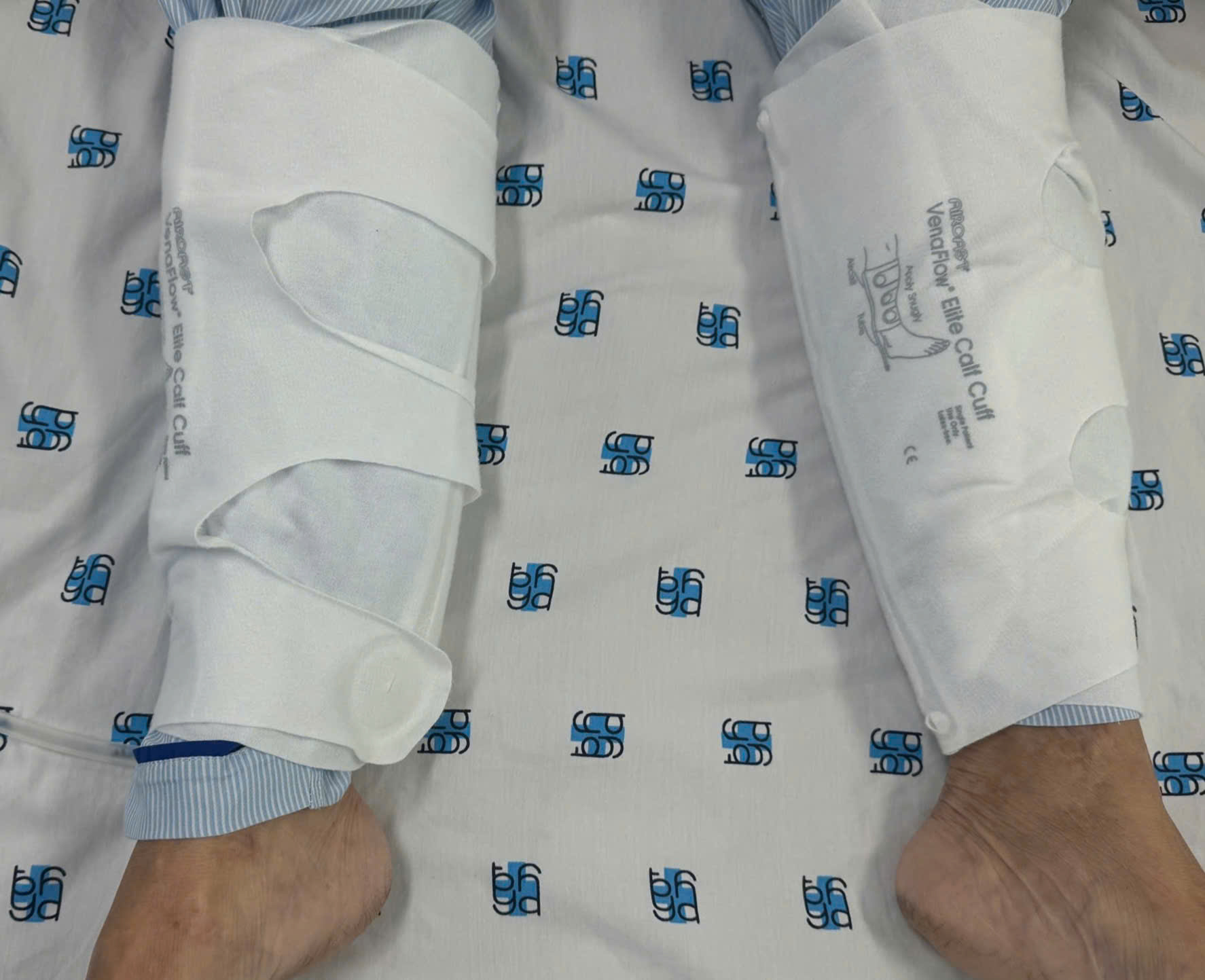
3. How Do SCDs Prevent Thrombosis?
By periodically applying and releasing pressure, sequential compression devices promote better blood flow, especially when you are confined to bed rest. This prevents blood from pooling and forming deep vein clots [4].
4. Benefits of Using Sequential Compression Devices (SCDs)
4.1. Reduces the Risk of Blood Clot Formation
SCDs are an effective measure for lowering the risk of clot formation by promoting circulation and preventing stasis [4].
4.2. Safe and Minimal Side Effects
As a mechanical prophylactic method, SCDs are generally safer and cause fewer side effects than pharmacological treatments [4].
4.3. Enhances Blood Circulation
The device significantly boosts venous blood flow, ensuring proper systemic circulation [4].
5. Essential Guidelines for Using SCDs
5.1. How to Put On and Take Off SCDs Correctly
Nursing staff will measure your legs and guide you on the correct application of SCD devices [4]. Ensuring a proper fit is crucial to maximizing effectiveness and avoiding discomfort.
5.2. Duration and Frequency of Use
You should wear SCDs as much as possible. The device is used continuously until you are no longer significantly immobilized [4].
Daily, the sleeves will be removed by nurses for the shortest possible time to clean and inspect skin integrity, preventing dermatological complications [1, 4].
There is no specific recommendation for a maximum continuous removal time, as prolonged interruptions reduce thrombosis prevention efficacy.
5.3. Abnormal Signs Requiring Immediate Medical Attention
Notify healthcare staff immediately if you notice any of the following:
- Signs of a Blood Clot in the Leg (Thrombosis): Leg swelling, leg pain, cramping or aching usually starting in the calf, skin color changes in the leg (such as redness or purplish discoloration), or a warm sensation in the affected leg [2].
.png)
- Signs of a Clot Traveling to the Lungs (Pulmonary Embolism): Sudden shortness of breath, chest pain or discomfort that worsens with deep breathing or coughing, lightheadedness or dizziness, fainting, rapid pulse, rapid breathing, or coughing up blood [2]. This is a medical emergency requiring immediate resuscitation.
- Issues Related to Compression Devices (SCDs): Skin indentations, blistering, or discoloration—especially over heels and bony prominences—or if you experience pain or discomfort [4].
5.4. Patient and Family Cooperation Is the Key to Success
To ensure SCDs achieve maximum effectiveness, cooperation from you and your family is essential. Always follow medical instructions regarding device usage. If you have any questions or concerns, do not hesitate to ask your doctor or nurse.
6. Frequently Asked Questions (FAQ)
- Can I remove the SCD device myself? You should not remove SCDs without guidance from healthcare personnel. The device must be worn continuously to ensure effective thrombosis prevention. Medical staff will assist you in removing them periodically for hygiene and skin checks.
- Do SCDs cause pain or discomfort? When measured and fitted properly, you should not feel pain—only a gentle, rhythmic squeezing sensation and circulation. If you experience pain, discomfort, or any abnormal signs, notify medical staff immediately for inspection and adjustment.
- Do I need to wear SCDs while sleeping? Yes, you should wear SCDs as much as possible, including during sleep, to ensure continuous thrombosis prevention [1, 4].
- If I am already taking anticoagulants, do I still need SCDs? SCDs and anticoagulant medications work through different mechanisms to prevent blood clots. Depending on your specific condition, your physician may prescribe both methods simultaneously to enhance protection. Always follow your treating physician's orders.
- How can I tell if the SCD is working properly? You can feel the regular inflation and deflation cycles of the device. Medical staff will regularly check the device and your legs to ensure proper functioning and monitor for signs of new blood clots.
- Can I purchase an SCD device to use at home? An SCD is a medical device, and its use requires prescription and guidance from a physician or healthcare professional. If you need to use one at home post-discharge, consult your treating doctor to evaluate your condition, receive guidance on the appropriate device type, proper usage, monitoring protocols, and safety precautions. Purchasing and using one independently may compromise efficacy or cause unwanted risks.
7. References
[1] Arabi, Y. M. (2019). Adjunctive Intermittent Pneumatic Compression for Venous Thromboembolism Prophylaxis. The New England Journal of Medicine.
https://www.nejm.org/doi/full/10.1056/NEJMoa1816150. Accessed: 2025-11-20.
[2] Mayo Clinic (2022). Deep vein thrombosis (DVT) - Symptoms & causes.
https://www.mayoclinic.org/diseases-conditions/deep-vein-thrombosis/symptoms-causes/syc-20352557. Accessed: 2025-11-20.
[3] Mayo Clinic (2022). Deep vein thrombosis (DVT) - Diagnosis & treatment.
https://www.mayoclinic.org/diseases-conditions/deep-vein-thrombosis/diagnosis-treatment/drc-20352563. Accessed: 2025-11-20.
- [4] National Institute for Health and Care Excellence (2019). Recommendations | Venous thromboembolism in over 16s: reducing the risk of hospital-acquired deep vein thrombosis or pulmonary embolism. https://www.nice.org.uk/guidance/ng89/chapter/Recommendations#mechanical-vte-prophylaxis. Accessed: 2025-11-20.
The information above is for reference purposes only and is not intended as medical advice. Please contact your doctor for detailed medical consultation.