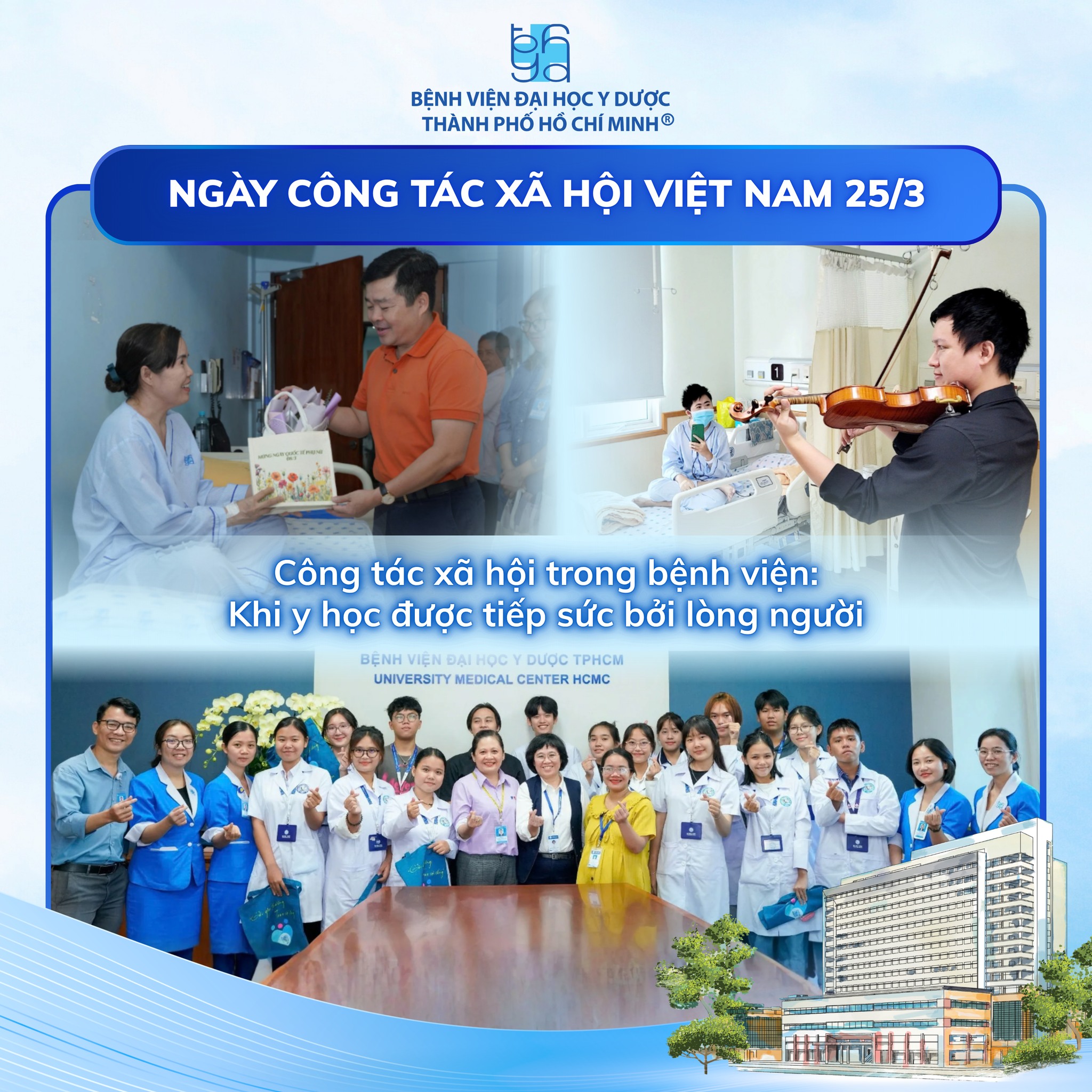
Social work in hospitals: When medicine is supported by the human heart - On Vietnamese Social Work Day March 25
In a space that seems to be reserved only for vital signs, treatment protocols, and modern medical equipment, there exists a silent yet persistent “current” — hospital social work (CTXH). While they do not directly wield scalpels or prescribe medication, those involved in CTXH play a decisive role in comprehensive treatment outcomes, as they touch the deepest aspects of patients: psychology, circumstances, and beliefs.
“Soft piece” of the healthcare system
Modern medicine continues to advance towards specialization, precision, and technologization. However, illness has never been solely a biological story. Behind each case is a person with worries, anxieties, financial burdens, and even mental trauma. That is the gap that social work fills. In hospitals, the CTXH team acts as a bridge between patients, medical staff, families, and the community. They guide admission and discharge procedures; assist with answering questions; receive and handle feedback; and also organize psychological counseling activities, patient social gatherings, and emotional support before and after treatment. More importantly, they serve as a conduit for vulnerable patients to access financial aid, medication, and treatment costs. In many cases, this timely support has opened up a chance to live. In other words, if doctors treat the disease, CTXH treats the “non-medical” factors that directly affect treatment outcomes.
From individual support to a professional system
In recent years, social work in hospitals in Vietnam has undergone a clear transformation: from individual support activities to a professional, organized, and systematic model. At the University Medical and Pharmacy Hospital in Ho Chi Minh City, social work has become an important component of comprehensive care. In recent years alone, tens of thousands of patients are counseled for admission and discharge each year; tens of thousands of satisfaction surveys are conducted; hundreds of cases receive psychosocial interventions; along with hundreds of social welfare and community health programs being implemented. Notably, resources mobilized from socialization have reached a very high level, growing each year, providing conditions to support cancer patients, poor patients, and other particularly difficult cases. Moreover, the application of technology has also been intensified. From electronic survey systems, patient feedback management to remote care methods, all aim at the common goal: enhancing patient experience and satisfaction.
A mark during the most difficult times
The value of social work becomes increasingly evident during times of crisis, especially the COVID-19 pandemic. When hospitals become the front line in fighting the epidemic, when patients have to be completely isolated from their families, the social work team has become an “emotional bridge”. Video calls between severely ill patients and their relatives, messages of love, psychological support for both patients and medical staff… all have contributed to easing the pain in harsh circumstances. Moreover, they also participate in organizing community support activities, mobilizing resources, caring for families affected by the epidemic, clearly demonstrating the role of social work as a fast, flexible, and humane social response force.
When kindness needs to be organized
One of the major challenges of social work is how to ensure that kindness does not stop at a fleeting emotion, but becomes a sustainable value. In practice, it shows that without a transparent management mechanism, without clear procedures, support activities easily fall into a fragmented, ineffective state. Therefore, standardizing procedures, building networks, training personnel and establishing sustainable cooperation relationships with organizations and enterprises are key factors. At the University of Medicine and Pharmacy Hospital in Ho Chi Minh City, this work has been implemented in a synchronized manner: from regulations on receiving – using donations, procedures for supporting patients to training programs, sharing experiences with other units. The results are not only impressive numbers, but also the trust of the community, patients and partners.
Towards a comprehensive health system
In the context of the health sector undergoing a strong transformation, moving towards a comprehensive care model, social work increasingly affirms an indispensable role. Not only as an “add‑on”, social work is becoming a pillar in the modern health system – where people are cared for not only physically but also mentally and socially. The story from the University of Medicine and Pharmacy Hospital in Ho Chi Minh City shows: when social work is organized systematically, guided by management thinking and nurtured by compassion, it can create values that go beyond the hospital's framework.
On March 25, honoring social work is not only recognizing a profession, but also affirming a viewpoint: Medicine, no matter how modern, cannot be separated from humanity. And social work is the thread that keeps medicine always connected to humanity.
Master Nguyen Quang Duy - Head of the Legal and Internal Audit Unit, University of Medicine and Pharmacy Hospital, Ho Chi Minh City