

Cardiovascular Surgery Department

Overview
Established in 2006, the Cardiovascular Surgery Department has continuously developed and expanded, and now the Department has become a key unit of the Cardiovascular Center – University Medical Center Ho Chi Minh City Hospital. The Department is responsible for treating surgical cardiovascular diseases such as valve disease, coronary artery disease, aortic disease, heart tumors, and congenital heart disease in adults and children.
The Department is proud to be the first unit in the South to implement minimally invasive endoscopic heart surgery techniques with outstanding advantages over open surgery. To date, the Department remains a pioneering unit applying and deeply developing minimally invasive cardiac treatment techniques to provide patients with optimal treatment outcomes. Especially the transcatheter heart valve replacement techniques that do not require surgery such as transcatheter aortic valve implantation – TAVI and transcatheter pulmonary valve replacement – TPVR, which the Department has implemented since 2014 and 2023, currently leading the country in this technique.
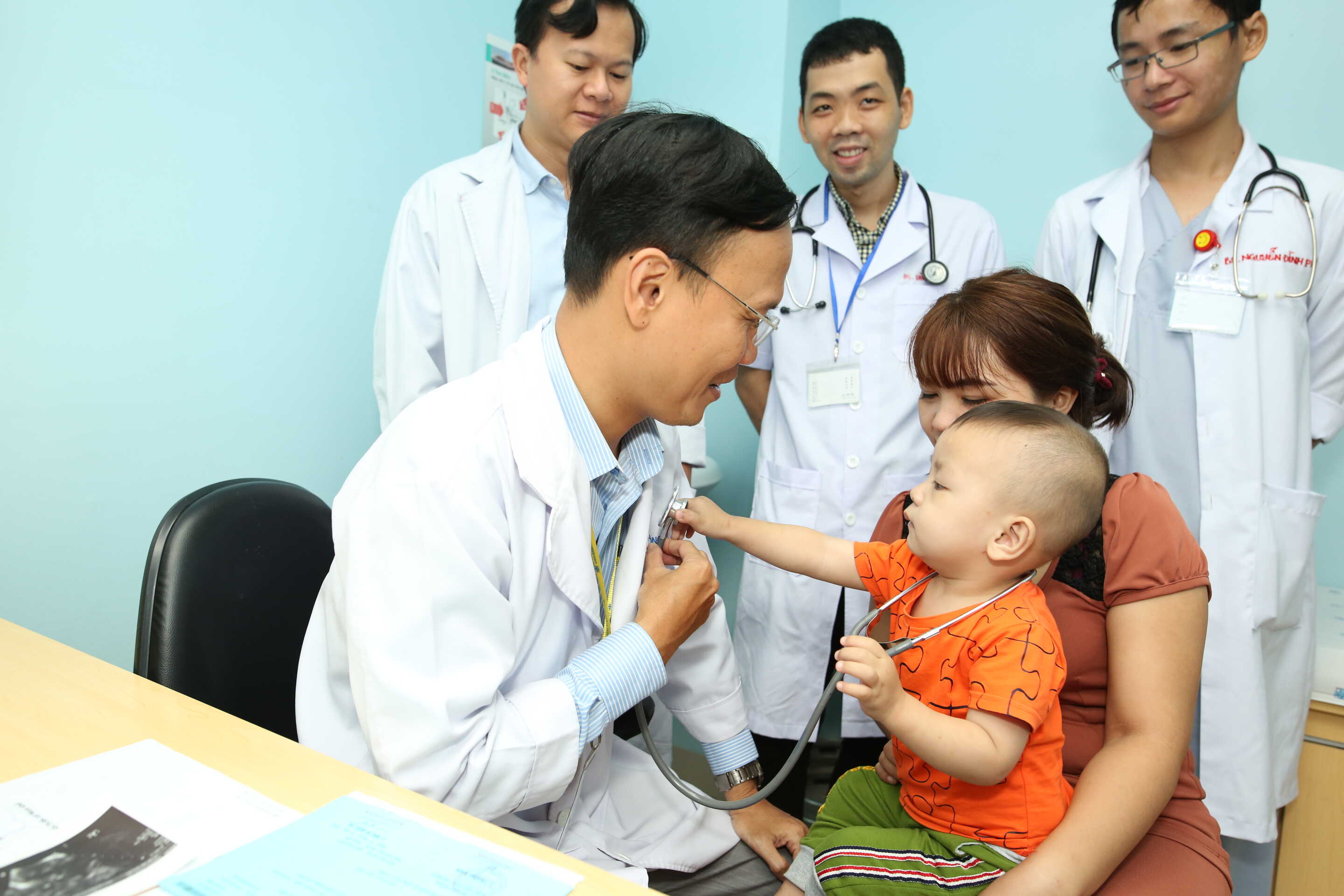
COMMUNITY OUTREACH ACTIVITIES
Since 2006, the Department of Cardiac Surgery has organized congenital heart disease screening programs across numerous provinces in Central and Southern Vietnam. In collaboration with local and international charitable organizations, the department provides financial assistance for interventions and surgeries to underprivileged patients. Updated data from 2020 to 2025: Organized 35 clinical outreach trips to various provinces, providing free cardiac examinations and echocardiograms for 25,000 patients with congenital heart disease; 900 patients received funding support for surgical and transcatheter interventions.
In partnership with sponsors, the Department of Cardiac Surgery operates 2 charity shelters featuring 11 fully equipped private rooms, providing free accommodation and meals for patients and their families while awaiting admission or follow-up visits.
Unit
Cardiovascular Imaging Unit
Cardiovascular Anesthesia Unit
Endovascular Aortic Intervention Unit
Congenital Cardiac Intervention Unit
Strength
With the goal of meeting the increasing demand for medical examination and treatment, the Department of Cardiovascular Surgery continuously strives to raise professional expertise, apply many advanced techniques, and combine modern medical equipment that provides strong support for early disease detection, timely and effective treatment.
LEADING HEART TRANSPLANTATION CENTER
One of the key milestones in the specialized development strategy of the Department of Cardiac Surgery is the field of heart transplantation and end-stage heart failure management. The department continues to assert its position as a leading heart transplant center, capable of performing heart transplants from brain-dead donors and aiming to expand the routine implementation of advanced mechanical circulatory support systems, such as Left Ventricular Assist Device (LVAD) implantation. Comprehensive advancements in personnel, surgical techniques, and specialized intensive care systems have enabled the department to master complex heart transplantation procedures, giving a second chance at life to patients suffering from end-stage heart failure.
The Department of Cardiac Surgery continuously updates and adopts state-of-the-art techniques to optimize therapeutic outcomes:
Surgical Services
Valve repair and replacement for all cardiac valves (mitral, tricuspid, aortic, and pulmonary), with a major focus on total endoscopic cardiac surgery.
Minimally invasive congenital heart surgery via right axillary thoracotomy performed routinely for various congenital heart defects, including atrial septal defect (ASD), ventricular septal defect (VSD), atrioventricular canal defect (AVC), and Tetralogy of Fallot (TOF).
Coronary artery bypass grafting (CABG) utilizing modern techniques such as off-pump coronary artery bypass (OPCAB) and total arterial revascularization.
Aortic surgery for thoracic and abdominal aortic aneurysms, aortic dissection, and related pathologies.
Surgical correction of complex congenital heart defects, including neonatal cardiac conditions, single ventricle physiology, and adult congenital heart disease (ACHD).
Heart transplantation from brain-dead organ donors.
Left Ventricular Assist Device (LVAD) implantation.
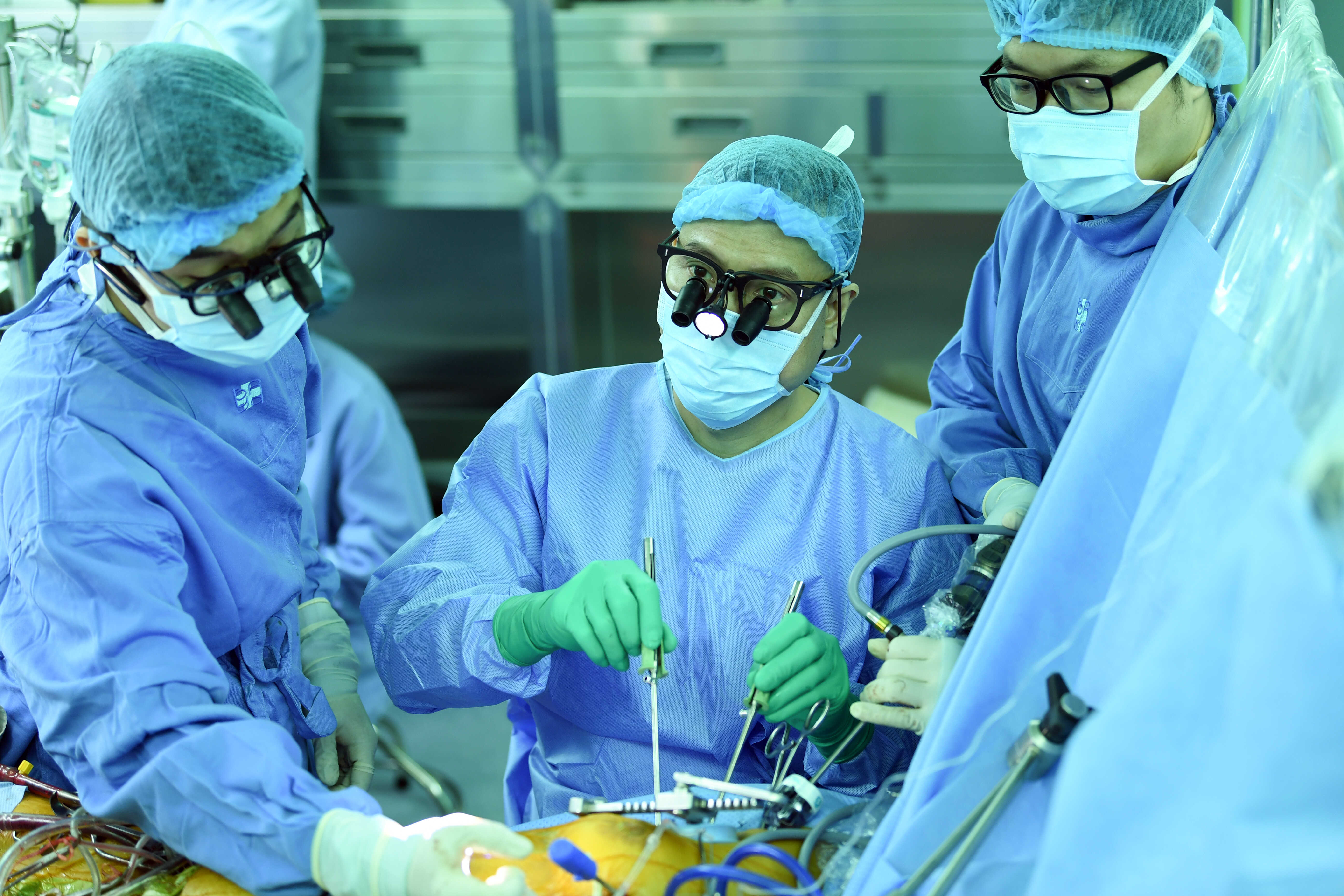
Interventional Cardiology & Endovascular Procedures
Endovascular aortic repair (EVAR/TEVAR) for aortic diseases without open surgery
Transcatheter aortic valve implantation (TAVI) (hoặc Transcatheter Aortic Valve Replacement - TAVR)
Transcatheter pulmonary valve replacement (TPVR)
Transcatheter interventions for congenital heart defects: Device closure of ventricular septal defect (VSD), device closure of atrial septal defect (ASD), patent ductus arteriosus (PDA) occlusion, balloon valvuloplasty, stenting, and related transcatheter procedures.
Training & Research
Regarding training, with an advanced School‑Institute combined model, the Department’s leadership also serves as the Chair of the Thoracic Surgery Department at the University Medical Center Ho Chi Minh City, giving the Department a distinct advantage in education.
In terms of scientific research, the Department has completed many minimally invasive cardiac surgery projects. It leads city‑level scientific research topics such as “Effectiveness of minimally invasive cardiac surgery”; “Effectiveness of total arterial coronary artery bypass surgery”. Throughout its operation, the Department has produced more than 30 scientific papers published in reputable ISA medical journals indexed in Scopus, and over 200 papers published in domestic medical journals.
In terms of international cooperation, the Department is the only unit in Asia participating in the minimally invasive mitral valve surgery database together with 22 cardiac centers in North America and Europe.
Each year the Department trains resident physicians, Masters, PhDs, CKI and CKII physicians for postgraduate doctors. Moreover, the Department expands training to international fellows, including postgraduate doctors from the Netherlands, Japan, … The Department regularly organizes conferences, seminars, continuous medical education (CME) programs, and professional meetings with provincial hospitals from the South Central region to Ca Mau. Notably, the Department was selected as the rotating host for the Asian and International Cardiac Surgery Congress. In addition, the Department frequently presents at international conferences and seminars to broaden expertise, foster exchange, and share experience.
During its operation, the Department has produced more than 30 scientific papers published in reputable ISA medical journals indexed in Scopus, and over 200 papers published in domestic medical journals.
The Department signs a professional cooperation agreement with the Leipzig Cardiology Center (Germany), UCSF University Hospital (USA), and St. Bartholomew’s Hospital (UK). This activity further strengthens the good relationship between the units, and also provides an opportunity for comprehensive cooperation in training, professional exchange on minimally invasive heart surgery in particular and cardiology in general.
Equipments
In addition to human resources, a modern system of equipment and machinery is an indispensable component that determines the quality of cardiovascular examination and treatment. Aiming to provide patients with the best service quality, the Department currently possesses advanced equipment such as:
ECG machine for electrocardiogram to check heart rhythm.
24‑hour home blood pressure monitor that continuously tracks ambulatory blood pressure for 24 hours to detect hypertension early or evaluate treatment effectiveness.
Holter ECG monitor that records heart rhythm continuously from 24 hours up to 14 days with 12 leads, helping detect arrhythmias such as bradycardia, tachycardia, and myocardial ischemia.
Specialized cardiac and vascular ultrasound machine that assesses blood flow in the body, allowing identification of abnormalities such as arterial or venous blockage, atherosclerosis, thrombus, etc.
Cardiac and coronary MSCT scanner for high‑sensitivity, high‑specificity imaging diagnostics.
Cardiac MRI scanner providing faster, more accurate images than X‑ray for diagnosing cardiovascular diseases.
DSA system – a two‑plane coronary angiography machine offering a new vascular imaging method for diagnosing cardiac and vascular diseases.
ECMO system that uses external circulation and oxygen exchange to support life in patients with severe circulatory or respiratory failure.
The operating rooms and cardiovascular intensive care unit meet international standards, providing patients with confidence and comfort during procedures.
Staff
The staff at the Department of Cardiovascular Surgery includes many Associate Professors, PhDs, and Masters trained abroad from countries with leading medical education such as the United States, France, Japan, South Korea,… All doctors are surgeons with many years of experience in cardiovascular surgery, proficient in minimally invasive techniques (endoscopic heart surgery). Additionally, the nursing team, rigorously trained at the University Medical Center Ho Chi Minh City, cannot be overlooked. With a combined training‑practice School‑Institute model, the nursing staff are skilled from the start, providing strong support for physicians in treating and comprehensively caring for patients.