

Department of Neurosurgery

Overview
In everyday life, there are many neurological–spinal diseases that affect patients' daily activities. However, sometimes, due to lack of understanding of the disease or other reasons, many patients overlook neurological–spinal symptoms, even warning signs of life‑threatening conditions. Neurological–spinal diseases are very diverse, such as brain tumors, cerebral vascular malformations, cerebral aneurysm sacs, skull trauma, disc herniation, spinal degeneration…
Neurosurgical operations help solve many neurological–spinal diseases at their root. With the advancement of supporting equipment, Neurosurgery doctors can confidently treat diseases while preserving patients' neurological functions. The Department of Neurosurgery has 32 regular beds on floor 8A and 16 intensive Neurosurgical Intensive Care beds on floor 5A. As one of the hospital’s flagship specialties, it plays an important role in clinical care, training and scientific research in neurosurgery. With a development direction that balances high‑quality clinical practice and medical academia, the department not only provides patients with a solid emotional support, treatment assistance through knowledge, extensive experience, empathy and sharing, meeting the growing treatment needs of patients, but also contributes to training specialized medical personnel for Vietnam’s healthcare system.
Unit
Original Form Neurological Electrophysiology Monitoring During Surgery
Original Form Spinal Pathology and Peripheral Nerve Surgery
Original Form Peripheral Neurological Resuscitation
Primary Pediatric External Neurology Prescription
Primary Pain Treatment Prescription
Primary Neurovascular Intervention Prescription
Strength
The Department of Neurosurgery has strengths in surgery and treatment of cranial and spinal–medullary diseases with a wide range of conditions, including complex cases. The main specialties of the department include:
- Cranial disease group
- Microsurgery for cerebrovascular malformations
- Microsurgery clipping of aneurysmal cerebral artery pouch
- Microsurgery for intracranial vessel bypass or graft
- Microsurgery for treatment of trigeminal nerve V pain (combined with endoscopic assistance to decompress microvessels during surgery)
- Microsurgery for hemifacial spasm treatment (combined with endoscopic assistance to decompress microvessels during surgery)
- Microsurgery for intracranial tumor treatment above and below the tentorium (using a robotic neurosurgical microscope system)
- Microsurgery for optic canal region neurotumor treatment
- Microsurgery for brainstem tumor treatment (using a robotic neurosurgical microscope system, intraoperative neurophysiological monitoring system)
- Endoscopic surgery for pituitary region tumor via the sphenoid sinus
- Endoscopic surgery for anterior cranial floor tumor
- Spinal disease group
- Spinal fixation – decompression surgery; scoliosis correction surgery
- Spinal endoscopic surgery
- Minimally invasive lumbar spine surgery
- Spinal tumor surgery compressing the spinal cord
- Endovascular disease group
- Endovascular intervention for cerebral aneurysm
- Endovascular intervention for cerebral arteriovenous fistula
- Endovascular intervention for spinal arteriovenous fistula
- Endovascular thrombectomy for acute ischemic stroke
- Endovascular embolization of tumor-feeding vessels
- Endovascular placement of cerebral artery stent
- Endovascular treatment of cerebrovascular malformations – spinal
- Pain disease group
- Chronic pain treatment using high-frequency waves
- Chronic pain treatment with steroids
- Chronic pain treatment with platelet-rich plasma
- Pain treatment using Scrambler pain relief device
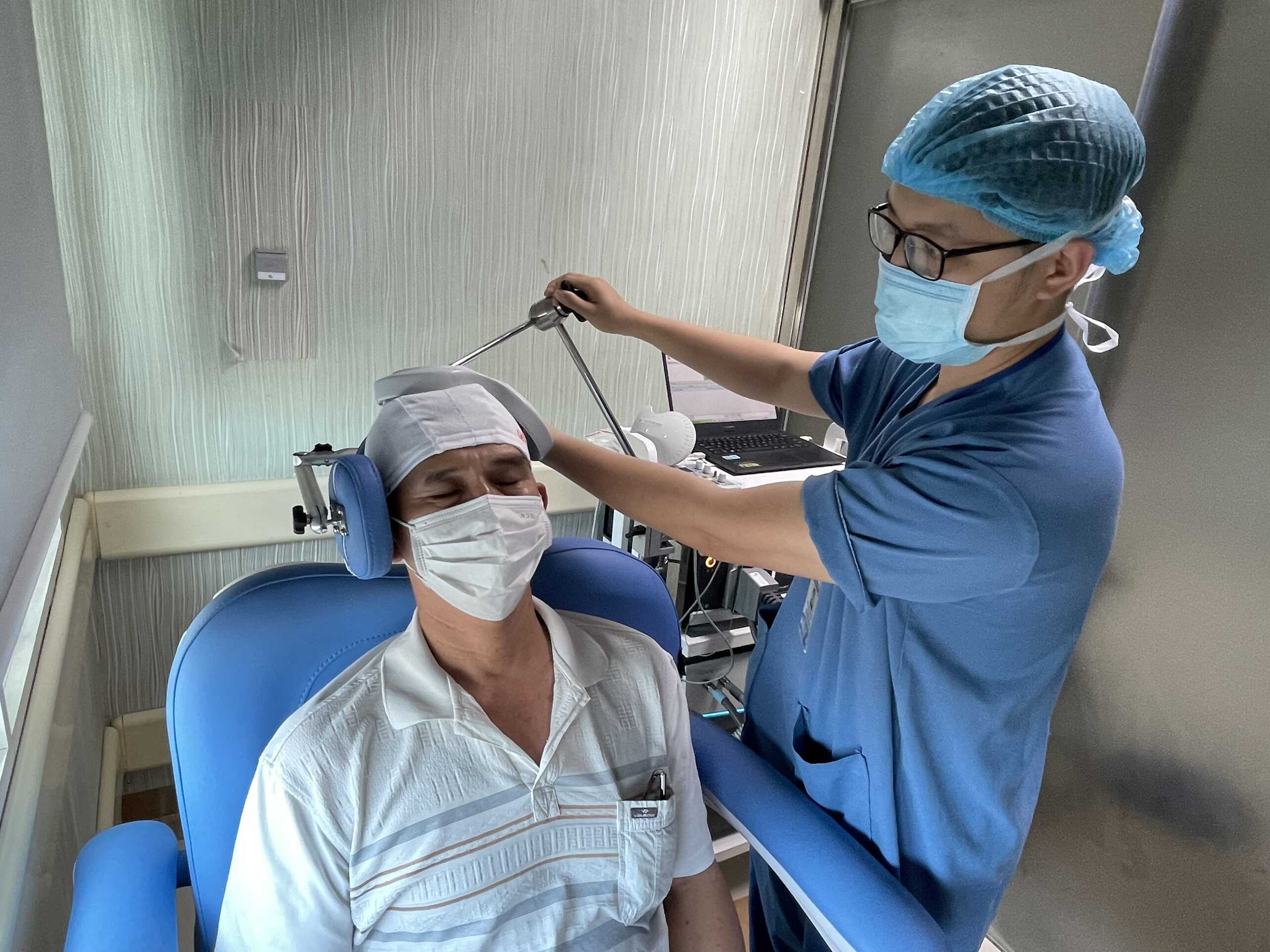
- Pain treatment using transcranial electrical and magnetic stimulation devices
- Placement of spinal cord stimulation electrodes
- Post-cancer pain treatment
- Acute postoperative pain treatment
- Extracranial neurocritical care group
- Critical care for subarachnoid hemorrhage
- Critical care for severe traumatic brain injury
- Critical care for intracerebral hemorrhage, intraventricular hemorrhage
- Critical care for spinal cord injury
- Critical care after surgery for pituitary tumors, meningioma, suprasellar region tumors
- Critical care for status epilepticus
- Critical care for central nervous system infections
- Pediatric neurosurgery group
- Treatment of pediatric brain tumors
- Treatment of drug-resistant epilepsy
- Treatment of congenital craniofacial anomalies
Each year, the Department of Neurosurgery admits approximately 2,000 inpatients with cranial and spinal neurological diseases, many of which are complex and challenging both technically and in terms of facilities.
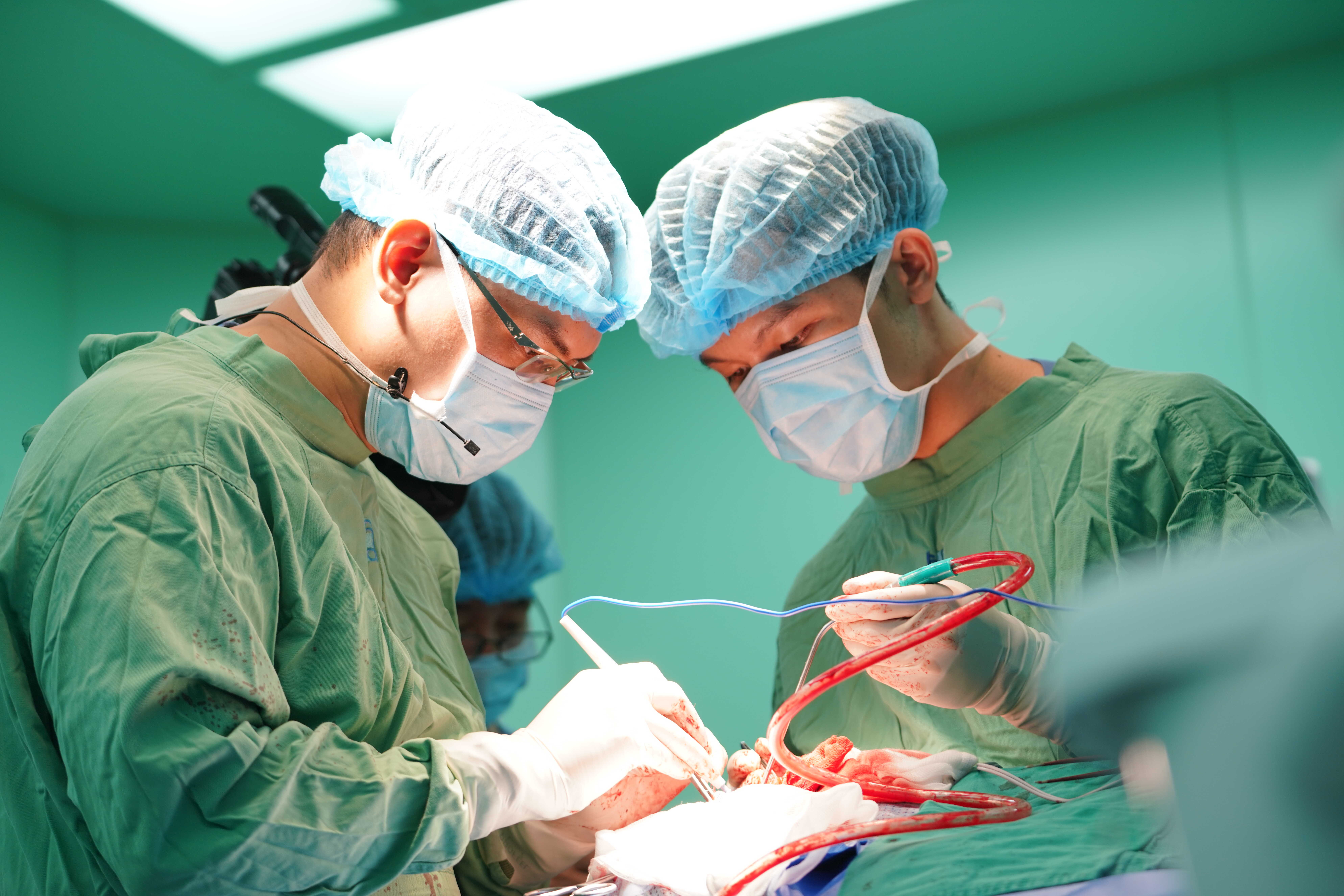
With a patient-centered approach, the Department of Neurosurgery continuously strives to develop minimally invasive, highly effective treatments that reduce hospital stay, lower costs, and help patients quickly return to normal life. Many diagnostic–treatment protocols have been developed by the department to suit the realities of patients in Vietnam and are continuously updated based on the latest global research.
Currently, the Department of Neurosurgery comprises six specialized treatment units:
Extracranial neurocritical care unit
Spinal and peripheral nerve pathology surgery unit
Pain treatment unit
Intraoperative electrophysiological monitoring unit
Neuroendovascular intervention unit
Pediatric neurosurgery unit
Future plans include establishing units: functional neurosurgery unit and endoscopic pituitary and anterior cranial floor tumor surgery unit.
In addition, the department regularly conducts multidisciplinary case conferences for complex diseases. Multimodal, multidisciplinary treatment provides comprehensive therapeutic outcomes for patients, fostering confidence and reassurance during treatment at the University of Medicine and Pharmacy Hospital in Ho Chi Minh City.
Training & Research
Each year, the Department of Neurosurgery signs professional support contracts with provincial hospitals and city hospitals. Specialized seminars are organized to continuously update new knowledge for colleagues nationwide.
Basic research at the Department of Neurosurgery is highly regarded by leading professors and has been published in international scientific journals. Recent international publications of the Department of Neurosurgery:
Journal: Interdisciplinary Neurosurgery 2022. Evaluation of platelet-rich plasma injection technique in treating disc herniation.
Journal: Asian Journal of Surgery 2020. Treatment of lateral joint pain with high-frequency waves combined with corticosteroids.
Journal: World Neurosurgery 2021. Outcomes of epilepsy surgery in Vietnam: a multicenter study.
Journal: Epilepsy Open 2020. Results of extracranial vascular bypass treatment in Moyamoya disease in Vietnam.
Journal: Interdisciplinary Neurosurgery 2022. Evaluation of the technique of fixing cortical burr holes using cortical and subcortical electrical stimulation in neurosurgery.
Journal: Interdisciplinary Neurosurgery 2022. Electrophysiological monitoring techniques in lumbar spine fixation surgery.
Journal: Interdisciplinary Neurosurgery 2022. Treatment of supratentorial cerebral vascular malformations after vessel occlusion intervention.
Journal: Interdisciplinary Neurosurgery 2021. Value of electromyography monitoring in endoscopic lumbar spine decompression surgery at levels L4-L5, L5-S1.
Journal: Interdisciplinary Neurosurgery 2022. Occlusion of cavernous sinus internal carotid artery fistula via indirect approach through Labbé vein.
Journal: Journal of NeuroInterventional Surgery 2024. Auditory brainstem evoked potentials in microvascular decompression surgery for hemifacial spasm: a prospective study.
Journal: Interdisciplinary Neurosurgery: Advanced Techniques and Case Management 2024.
- Journal: Nature Scientific Reports, 2023. Tumor-related epilepsy and post-surgical outcomes: tertiary hospital experience in Vietnam. Sci Rep. 2023 Jul 5;13(1):10859. doi: 10.1038/s41598-023-38049-1.
Equipments
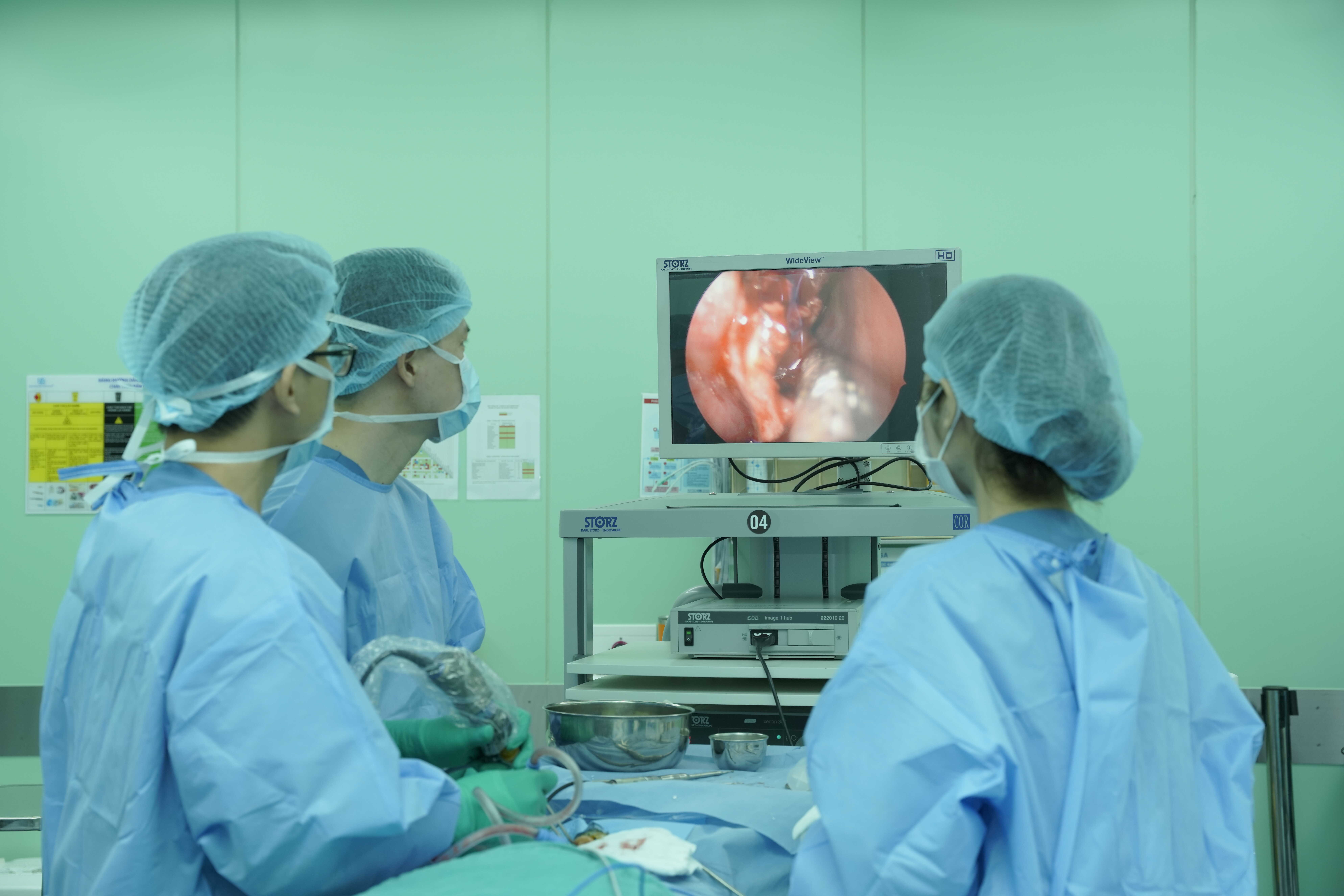
Recently, the Department of Neurosurgery has been equipped with advanced machinery, helping doctors treat and monitor patients more effectively: a continuous intracranial pressure monitoring system, a Kinevo 900 microsurgical and endoscopic system unique in Vietnam, an electrophysiological monitoring system during surgery, a Scramler pain relief machine, …
All patient beds have privacy curtains when needed and a small bedside for a caregiver. All beds in the department are multifunctional electric beds, operated by buttons. The beds have a call button system for medical staff assistance, lighting system, oxygen supply, suction system… Each ward room has its own convenient, clean restroom; the restroom includes a call button to summon medical staff in emergencies.
Staff
The personnel strengths of the Department of Neurosurgery at the University of Medicine and Pharmacy Hospital in Ho Chi Minh City are the gathering of leading physicians and experts. The team of doctors and nurses in the Department of Neurosurgery has deep knowledge and over 20 years of experience in treatment and patient care. Among them, 100% of doctors hold postgraduate degrees and 100% of nurses have university–postgraduate qualifications. Many doctors and nurses have been sent for training in countries with advanced medical systems such as the United States, South Korea, India, Taiwan, Thailand,…