

Department of Pharmacy

Overview
Born from the dream of having a training facility for future doctors, pharmacists, and nurses, Ho Chi Minh City University of Medicine and Pharmacy Hospital emerged as a groundbreaking innovation with the “Advanced School‑Hospital Integrated Model, the first of its kind in Vietnam”. Accompanying the hospital’s development from its inception to the present, the Department of Pharmacy has become one of the key pre‑clinical departments, managed by associate professors, masters, and highly reputable experts with high professional qualifications.
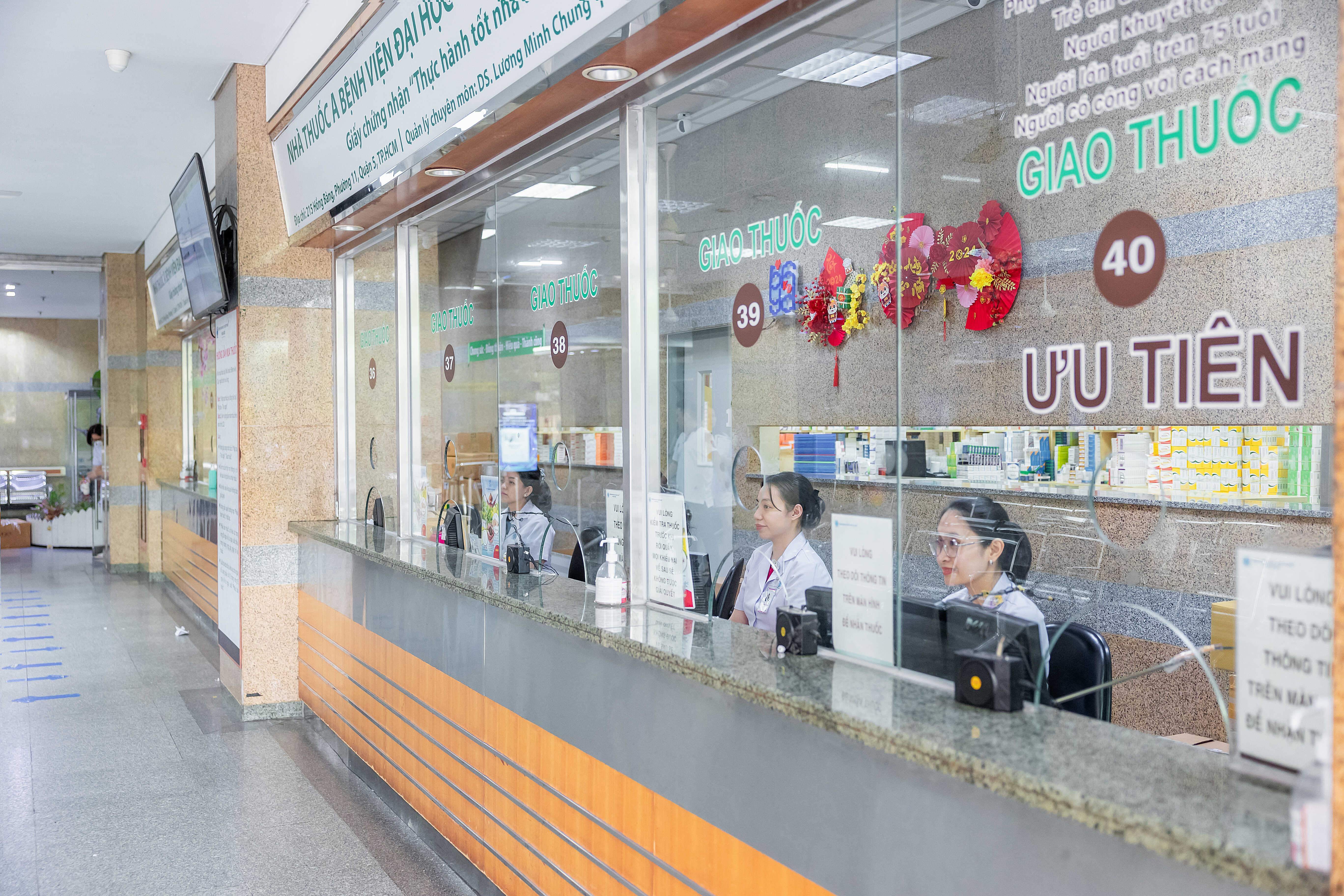
The organization of the Department of Pharmacy includes specialized units that are closely connected and coordinated, such as the Hospital Pharmacy, Clinical Pharmacy Information, Pharmacy Operations, Warehouse System, and Research & Training. Integrated investment in infrastructure and modern equipment enables the Department of Pharmacy to ensure the provision of high‑quality, timely medication, as well as support counseling, monitoring of safe and rational drug use, and provide thorough medication usage guidance to each patient.
Strength
Clinical Pharmacy
Pharmacists manage and control medication use for each patient. Specifically, with the electronic medical record (EMR) system, physicians' orders are directly transferred by the software to pharmacists for review and preparation of medication for each patient at specific doses, enhancing accuracy and safety in medication use for patients. Pharmacists advise medication use for each individual and exchange information to ensure patients understand and use medication safely, in accordance with the physician's prescription or the pharmacist's guidance.

Personalized Treatment Monitoring
TDM: Monitoring drug concentrations in blood and adjusting optimal doses for each patient, especially for highly toxic drugs such as vancomycin, aminoglycosides, voriconazole, valproate…
Antimicrobial Stewardship (ASP): Clinical pharmacists collaborate with physicians and microbiology specialists to control infections, tightly manage antibiotics, ensuring appropriate, adequate, and rational use, reducing the risk of resistance.
Intelligent risk management: The drug interaction alert system combined with the presence of pharmacists in patient rooms helps early detection and prevention of adverse drug reactions (ADR).
Technology applications in clinical pharmacy management
Real-time Alerts: Integrated into EMR to automatically detect duplicate active ingredients, adverse interactions, and contraindications for pregnant women.
High-risk patient management: Smart filters provide early warnings for special subjects such as renal failure, INR > 4, outpatients on anticoagulants.
Priority antibiotic control: Implement pre-authorization antibiotic management workflow in the software to ensure safe and appropriate use.
Digitized ADR reporting: Automatically integrated into clinical workflow, facilitating rapid feedback and handling of harmful drug reactions.
Pharmacy Operations
The Pharmacy Operations Department is responsible for developing plans and measures to ensure sufficient drug supply for prevention, diagnosis, and treatment. It also serves as the focal point for planning and organizing tenders to select drug suppliers for the hospital. With a university hospital orientation—integrating treatment, research, and training—the Department of Pharmacy not only ensures adequate and appropriate drug supply but also optimizes economic efficiency and patient safety through in-depth data management.
IT-based drug supply management
Operating a comprehensive drug supply management software system: The Department of Pharmacy uses a drug supply management software (Pharma), integrated with the electronic medical record (EMR) and document management systems (UMC home, UMC office). Data are linked in real time from contract signing – ordering – receiving – inventory – prescribing – dispensing – shipping – payment, enabling monitoring of drug consumption by department/group, analyzing usage trends by month/quarter/year, and alerting when exceeding limits or abnormal usage.
Forecasting drug demand using data analysis: applying ABC/VEN analysis, time series forecasting, seasonal and epidemiological trend analysis. By leveraging big data from the Pharma software, the Department of Pharmacy can develop supply plans aligned with actual treatment, reduce near‑expiry inventory, limit sudden drug shortages, and optimize inventory turnover.
Intelligent inventory control: Pharma software allows tracking inventory by batch, expiry date, supplier, alerts for soon‑to‑expire drugs, low stock warnings, and management of specially controlled medications. This mechanism enhances transparency and enables rapid traceability for inspections.
Standardizing processes – Increasing transparency
The Department of Pharmacy develops drug supply processes based on principles: analyzing demand using real data, planning and submitting catalog approvals, conducting tenders per regulations, monitoring contract execution on a digital platform, and periodically evaluating supply effectiveness. All data are digitized, reducing reliance on paper records and minimizing manual errors.
With modern IT platforms and a team of pharmacists skilled in data analysis, the Department of Pharmacy – University Medical Center of Ho Chi Minh City has affirmed its central role in managing smart, transparent, and efficient drug supply. This serves as a flagship model for hospital pharmacy management towards digitization, aligning with the modern healthcare development trend in Vietnam.
Quality Management
Quality management is one of the core responsibilities of the Department of Pharmacy to ensure sufficient, timely drug supply and improve effectiveness and safety in medication use. The Department has developed and standardized its processes and professional regulations according to the International Organization for Standardization (ISO 9001:2015) standards, covering procurement, storage, dispensing, high‑risk medication control, medication error management, and clinical pharmacy activities. Applying ISO standards contributes to systematization, transparency, and continuous improvement of pharmacy service quality.
Alongside process standardization, the Department of Pharmacy accelerates digital transformation in drug management and use, building a synchronized data platform to enhance monitoring, comprehensive tracking, and effective risk control.
Additionally, with close collaboration between the Department of Pharmacy and other departments, the Hospital has obtained certification for the Prevention of Intravenous Medication Errors (PRIME) program, in which 100% of prescriptions are reviewed by pharmacists before dispensing; prescription verification procedures, intravenous preparation/administration guidelines, and high‑risk medication warning labels are standardized according to the international Joint Commission International (JCI) standards while also fitting the hospital's practical conditions.
With an international‑standard development orientation, the Department of Pharmacy commits to continuously enhancing professional quality, strengthening the application of information technology, and fostering interdisciplinary collaboration to optimize treatment effectiveness, aiming to ensure safety and improve patient care quality.
Training & Research
In the hospital's comprehensive development strategy, the Department of Pharmacy identifies training and scientific research as two foundational pillars, also serving as a driving force to promote the transformation of the hospital pharmacy model towards specialization, standardization, and international integration.
Elevating professional competence and international integration
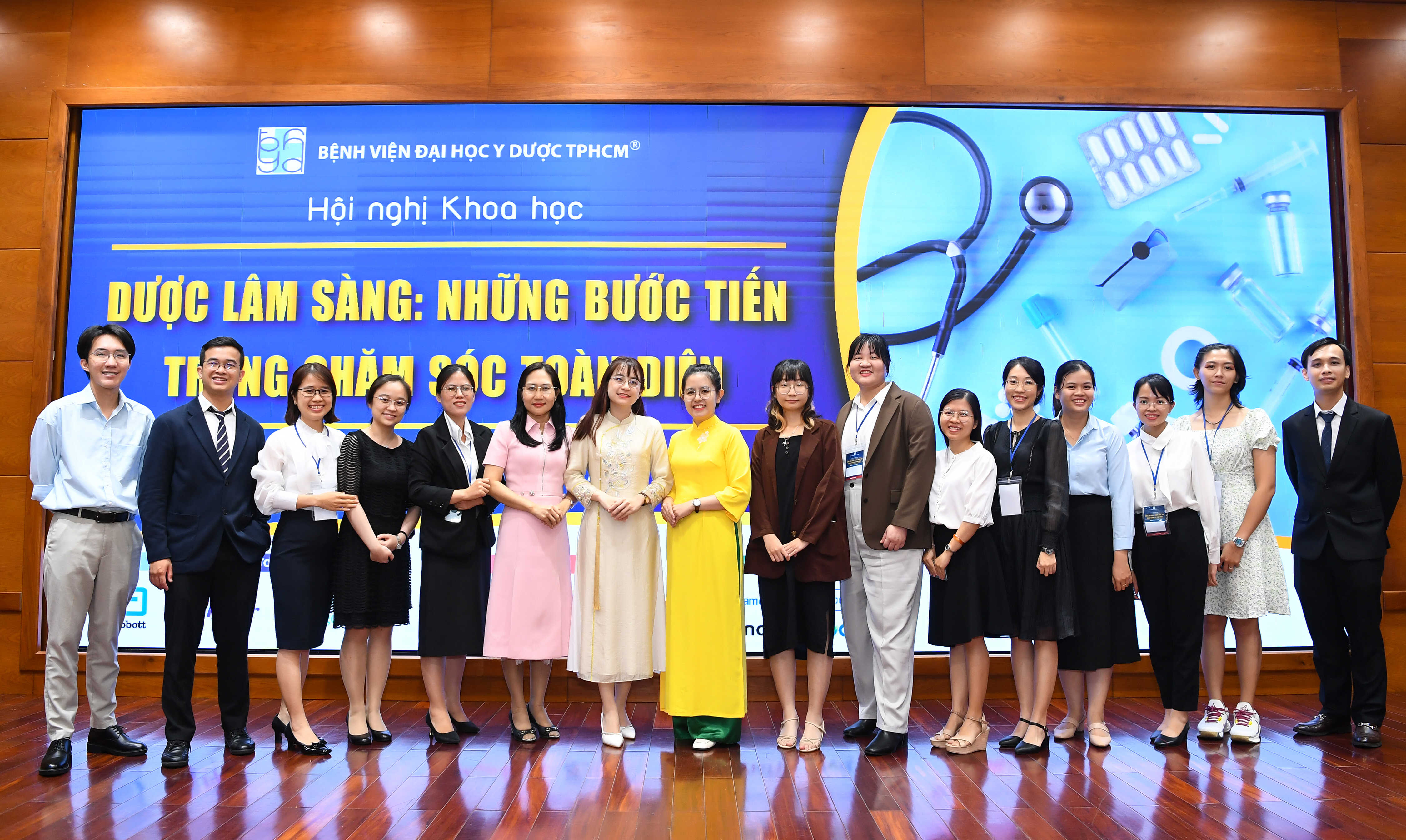
The period 2019–2024 recorded a strong development in both scale and depth of expertise in the Department of Pharmacy's training activities. On average each year, the department organizes 5–7 large‑scale scientific conferences and seminars, attracting participation from experts, physicians, and pharmacists both domestically and internationally.
The 2019 Clinical Pharmacy Conference held in person with 670 delegates marked a significant shift in clinical pharmacy activities. In 2021, the conference was held online with 1,899 delegates, affirming its academic standing and national‑level scientific event organization capacity. The 2025 conference “Clinical Pharmacists in the Era of Precision Medicine” continued to make a professional impact with 505 delegates, reflecting a development direction aligned with precision medicine and personalized treatment trends.
Alongside conference activities, the Department of Pharmacy has developed a continuous and intensive practical training system for undergraduate students, postgraduate trainees, specialty fellows, and pharmacists at healthcare facilities. The department’s clinical pharmacists play a core role in practical training, transferring operational models and guiding the implementation of standardized clinical pharmacy.
Pharmacists in the department are not only trained on‑site but are also encouraged to study abroad in countries such as Thailand, Taiwan, India, the United Kingdom, France, Australia, the United States… Additionally, the department proactively connects with many international experts to organize specialty conferences and implement multi‑center research projects. International collaboration is regarded as a key strategy to enhance training quality and standardize practice according to global standards. The department has launched advanced clinical pharmacy training programs involving:
Prof. Alan Hay Ming Lau, PharmD, FCCP, BCPS - Head of International Clinical Pharmacy Training, University of Illinois Chicago.
Assoc. Prof. Dr. Surakit Nathisuwan - Deputy Head of Department responsible for Planning and Quality Development, Clinical Pharmacy Division, Department of Pharmacy, Mahidol University.
Meanwhile, the Therapeutic Drug Monitoring (TDM) program has been developed with participation from U.S. clinical experts:
Jennifer Le, PharmD, MAS, BCPS-ID, FIDSA, FCSHP, FCCP.
Hung M. Le, PharmD, PhD.
These collaborative programs focus on optimizing therapy, dose individualization, high‑risk medication management, and developing pharmacokinetic‑pharmacodynamic analysis capabilities in clinical practice.
In the field of antimicrobial stewardship, the Department of Pharmacy plays a central role in developing, updating, and implementing hospital‑wide clinical guidelines, as well as organizing an annual “Hospital Antimicrobial Stewardship” training program for pharmacists from various healthcare facilities. The department also assists in implementing antimicrobial stewardship programs in many southern region hospitals in line with health authority directives, demonstrating its leadership and community responsibility.
Looking toward 2030, the Department of Pharmacy aims to establish a regional hub for advanced clinical pharmacy training, integrating education, practice, research, and digital transformation, while expanding international collaborations in postgraduate training and the transfer of advanced practice models.
Sustainable Development Foundation
The scientific research activities of the Department of Pharmacy are carried out with a focused orientation, concentrating on clinical pharmacy, treatment optimization, dose individualization, antibiotic stewardship, and high-risk drug management.
On average each year, the department’s members publish about 8–10 papers in domestic and international journals, with the number of scientific publications steadily increasing year by year, contributing to affirming the academic standing and research capability. The growth in quantity and quality of publications reflects a systematic investment strategy for research activities and the development of scientific human resources.
The department actively participates in the Youth Scientific Conference and the hospital’s annual scientific conference, achieving many notable results over the years, demonstrating comprehensive professional and research maturity. In 2025, at the 24th Asian Conference on Clinical Pharmacy (ACCP 2025) held in Indonesia, Associate Professor Dr. Đặng Nguyễn Đoan Trang – Head of the Department of Pharmacy, University Medical‑Pharmacy Hospital, Ho Chi Minh City – proudly received the Oral Presentation Second Prize for a study on the use of ceftazidime‑avibactam and ceftolozane‑tazobactam at the hospital. This achievement not only recognizes deep research capability in antibiotic stewardship, but also affirms the hospital’s academic standing on the Asian regional clinical pharmacy forum, marking an important milestone in the international integration strategy and the development of advanced clinical pharmacy toward 2030.
In addition to scientific publications, the Department of Pharmacy participates in drafting numerous national‑level professional guidelines, contributing to policy development and standardization of clinical pharmacy practice (“Clinical Pharmacy Practice Guidelines for Pharmacists in Certain Non‑communicable Diseases” of the Ministry of Health – Department of Health Care Management, “Antibiotic Use Guidelines” of the Vietnam Resuscitation and Toxicology Society, “Urinary Tract Infection Treatment Guidelines” of the Vietnamese Society of Nephrology, “Adverse Drug Reaction (ADR) Monitoring Guidelines for Healthcare Facilities” according to Decision No. 29/QD‑BYT dated January 5, 2022). These contributions affirm the Department’s professional role in standardizing clinical pharmacy practice at a macro level and contributing to the national health system.
In the development strategy toward 2030, the Department of Pharmacy aims to join high‑potential and strongly converging research groups in advanced clinical pharmacy fields, therapeutic drug monitoring, antibiotic stewardship, anticoagulant management, and treatment individualization, with the goal of enhancing international publications, expanding multi‑center research collaborations, and building a research ecosystem linking clinical practice, digital data, and in‑depth analytics.
Affirming Position – Toward 2030
Continuously selected as one of the units with outstanding clinical pharmacy activities at the Ho Chi Minh City Hospital Pharmacy Conference, expanded since 2015, the Department of Pharmacy continues to affirm its pioneering role in training, research, and international integration.
With a solid professional foundation, a clear development strategy, and a global integration orientation, the Department of Pharmacy commits to continuous innovation, enhancing the quality of professional activities, developing high‑quality human resources, and promoting the application of artificial intelligence (AI) in scientific research and training, aiming to become a benchmark clinical pharmacy unit with regional influence by 2030.
Equipments
The system software is built separately for each department: Clinical Pharmacy, inventory system, tendering, pharmacy, linking databases together and connecting with the electronic medical record to robustly support professional work. In particular, the clinical decision support system is integrated into the EMR software, including drug–drug interactions, medication for pregnant women, duplicate medications, dosage alerts... to provide complete, up-to-date information that assists healthcare staff in disease treatment.
Staff
The management team at the Department of Pharmacy consists of Associate Professors, PhD Pharmacists, Master's Pharmacists, and CKII Pharmacists with extensive experience, continuously trained in expertise and work skills to provide patients with the most accurate and effective prescription treatment.