
2025 Neurosurgery Conference: Minimally Invasive Surgery for Drug‑Resistant Epilepsy – A New Advancement in the Modern Era
On October 11, 2025, at the University Medical and Pharmacy Hospital of Ho Chi Minh City (BV ĐHYD) a scientific conference titled “Minimally Invasive Surgery for Drug‑Resistant Epilepsy in the New Era” took place. The event attracted over 100 experts, surgeons and physicians from the fields of neurosurgery, neurology, psychiatry, neurophysiology and anesthesiology. This is not only a forum for updating new knowledge, but also a venue for sharing practical experience, contributing to shaping the direction of epilepsy treatment in Vietnam amid increasing demand.
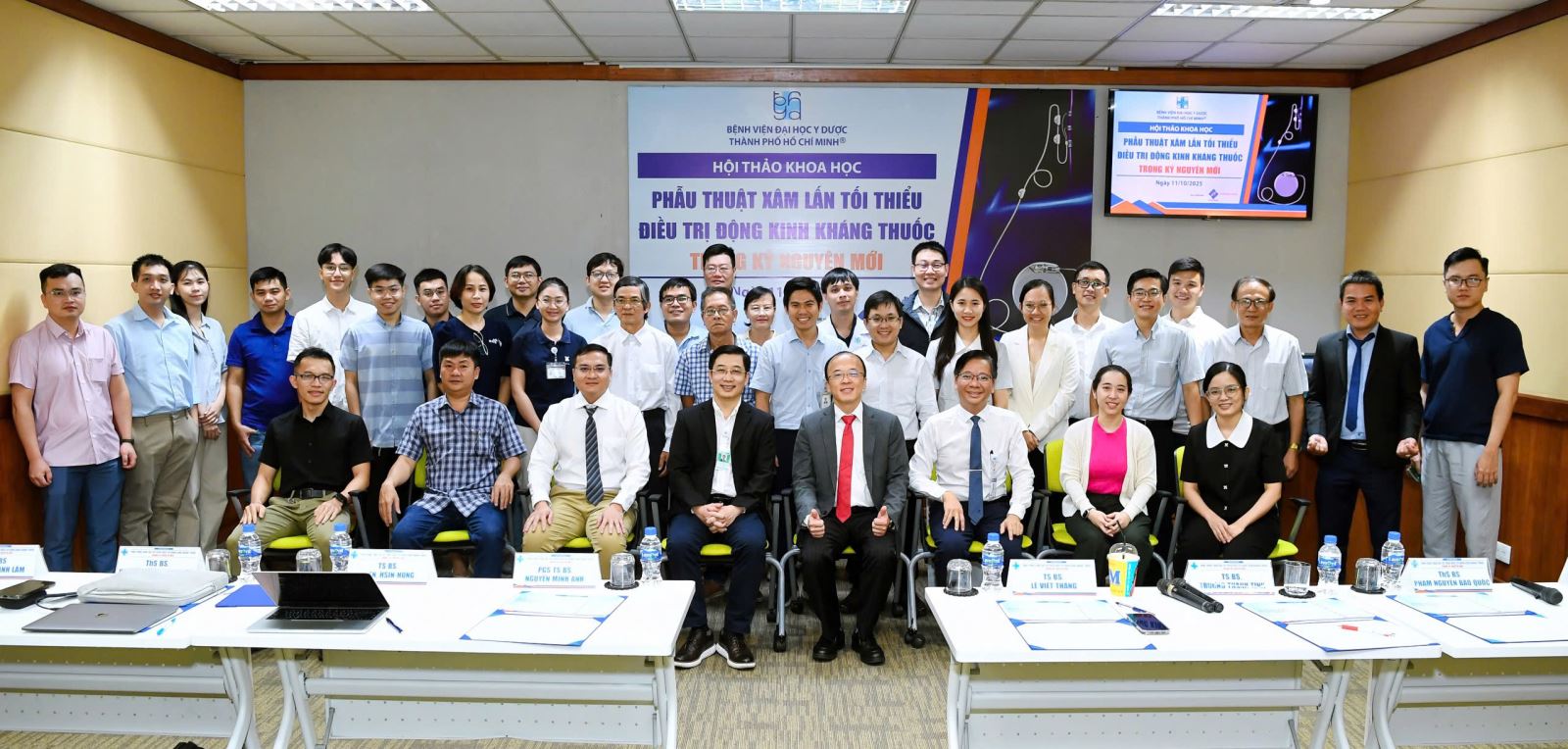
Opening remarks, Associate Professor Dr. Nguyen Minh Anh – Deputy Director of BV ĐHYD emphasized that drug‑resistant epilepsy is one of the major challenges of modern medicine, severely affecting patients’ health and quality of life. While pharmacological treatment remains the foundation, a substantial proportion of patients do not respond to medication and require surgical interventions. This conference aims to create a forum for the medical community to reflect on practice, update the latest advances, and standardize modern, minimally invasive, safer and more effective surgical solutions, to provide a better life for patients.
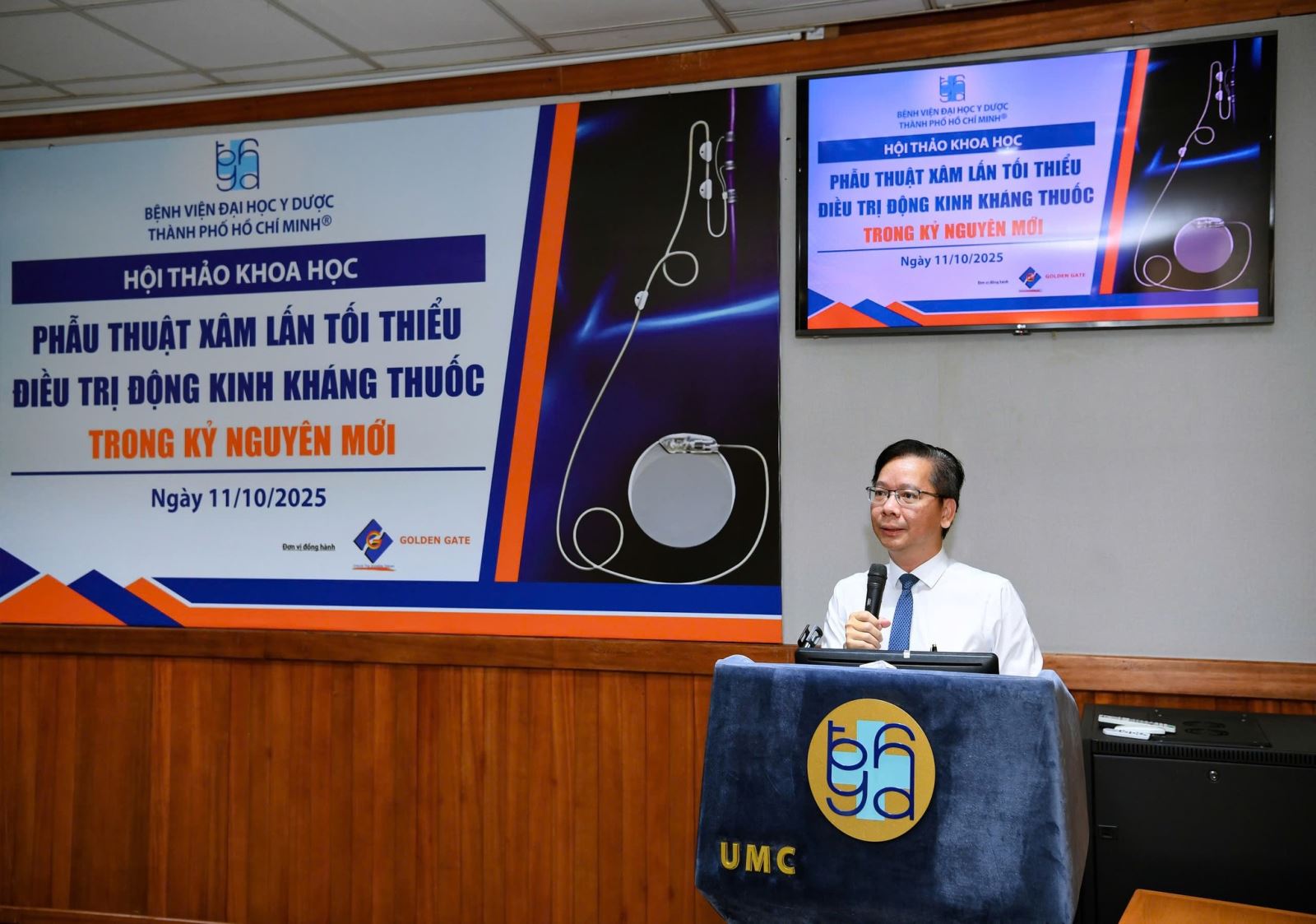
In the specialist presentations, many important issues were discussed, from optimizing pharmacological treatment, updating traditional epilepsy surgery techniques, to introducing advances in minimally invasive surgery. One highlight of the conference was the Vagus Nerve Stimulation (VNS) technique, which uses an implanted device to deliver electrical stimulation to the vagus nerve, thereby modulating brain activity and reducing the frequency and severity of seizures. This is seen as a promising direction for drug‑resistant epilepsy, as the procedure is highly safe, minimally invasive, offers rapid recovery, and can be extended to many patient groups.
At the conference, BV ĐHYD successfully performed the first VNS implantation surgery in Vietnam on a drug‑resistant epilepsy patient. The 17‑year‑old male patient had a 15‑year history of epilepsy; despite pharmacological and surgical treatment, seizures persisted at a frequency of 5–10 per day. The surgery was demonstrated live using a minimally invasive VNS approach with a small incision and minimal blood loss. Attendees observed the entire technical process, from preparation, anesthesia, surgery to device programming.
Associate Professor Dr. Truong Thanh Tinh – Head of the Neurosurgery Department at BV ĐHYD emphasized that the event not only marks a significant milestone in epilepsy treatment in Vietnam but also opens a long‑term development direction for the national Neurosurgery field. According to him, the successful implementation of the first VNS technique in Vietnam clearly demonstrates the professional competence and technical mastery of the surgical team. In the coming years, the combination of minimally invasive surgery with advanced technologies such as artificial intelligence, virtual reality and next‑generation neuro‑devices will expand treatment possibilities, offering better life prospects for many drug‑resistant epilepsy patients.
Beyond the outstanding advantages, experts also pointed out challenges in widespread implementation, including treatment costs, equipment and personnel requirements. Nevertheless, this conference created opportunities for healthcare institutions to strengthen cooperation, training and technology transfer, enabling patients across multiple levels of care to access modern methods. According to Associate Professor Dr. Truong Thanh Tinh, in the next 5–10 years, drug‑resistant epilepsy treatment will see strong growth through the integration of minimally invasive surgery with advanced technologies such as artificial intelligence, virtual reality and next‑generation neuro‑devices, ushering in a more comprehensive treatment era for patients.